

















© Kameelah Janan Rasheed. All rights reserved.



[A]: Rasheed, Kameelah Janan (2021)
I mean learning as a process of radical slowing down/deceleration in the context of almost compulsory acceleration under the current conditions; an attentiveness to a velocity that allows for a patient and close reading; an engagement with curiosity, serendipity, improvisation, and tangents. Learning is a persistent reminder of the shifting ecologies of what it means to know something.

︎
︎
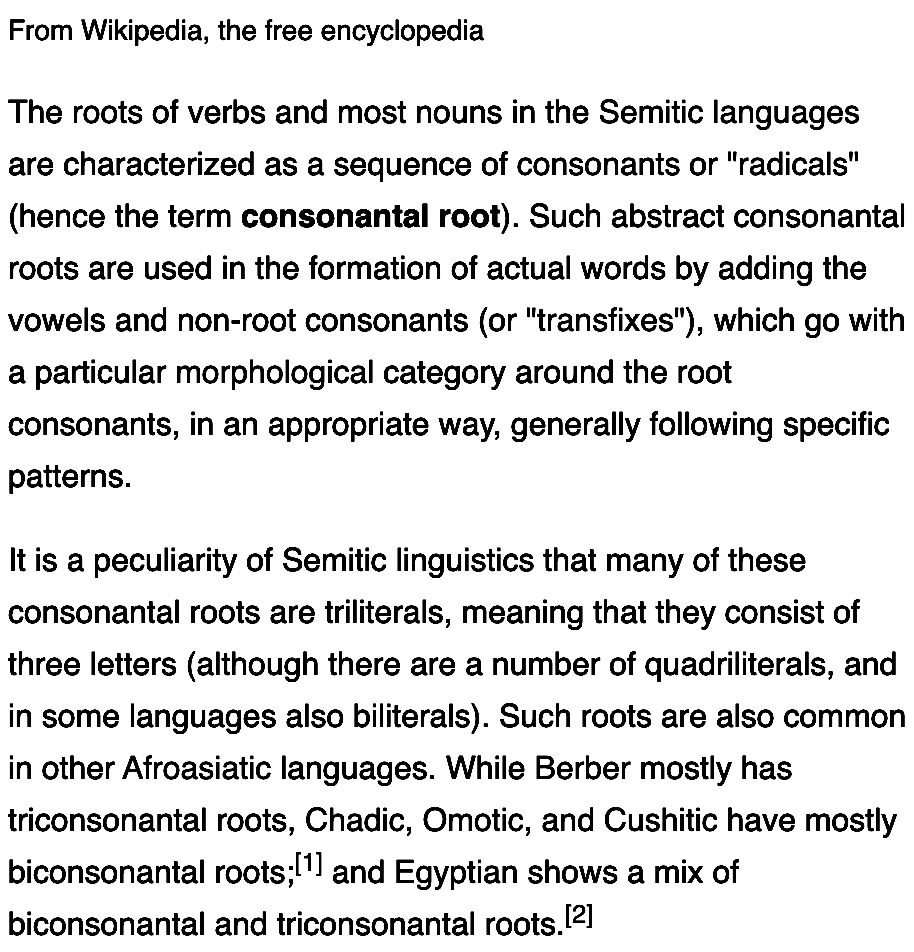
[C1]: “Semitic Root,” Wikipedia, last modified November 14, 2025, https://en.wikipedia.org/wiki/Semitic_root
︎
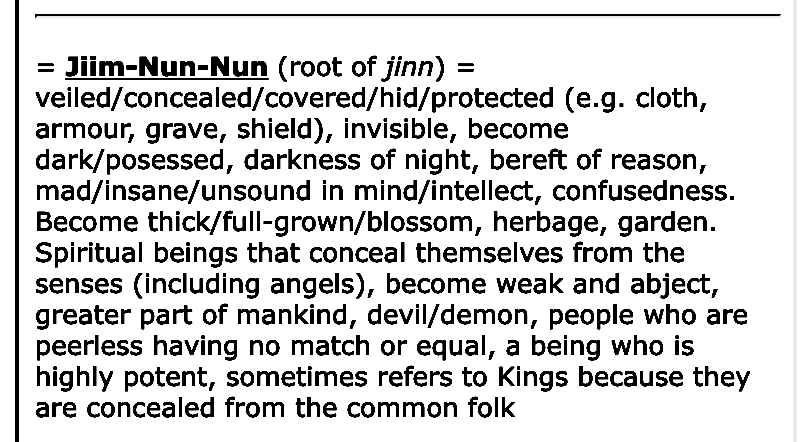
[C2]: “Project Root List,” StudyQuran, accessed November 16, 2025, https://studyquran.org/PRL/PRLonline.htm
︎
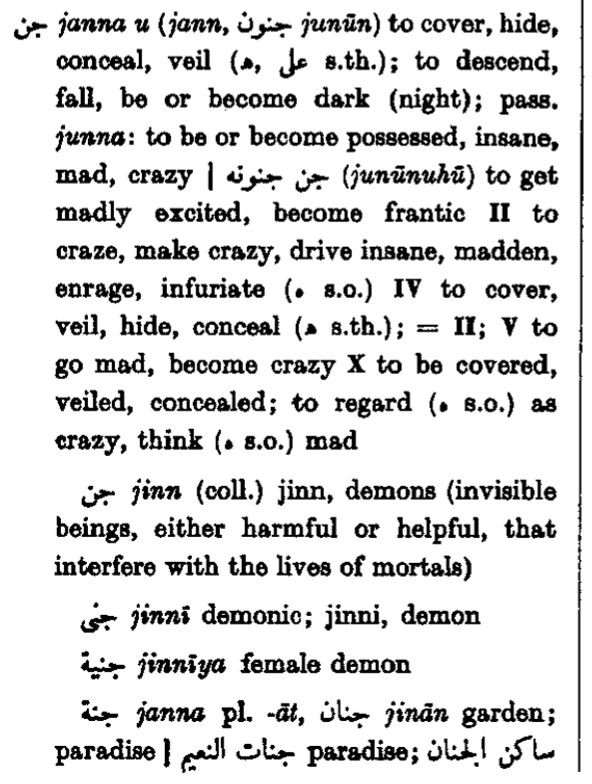
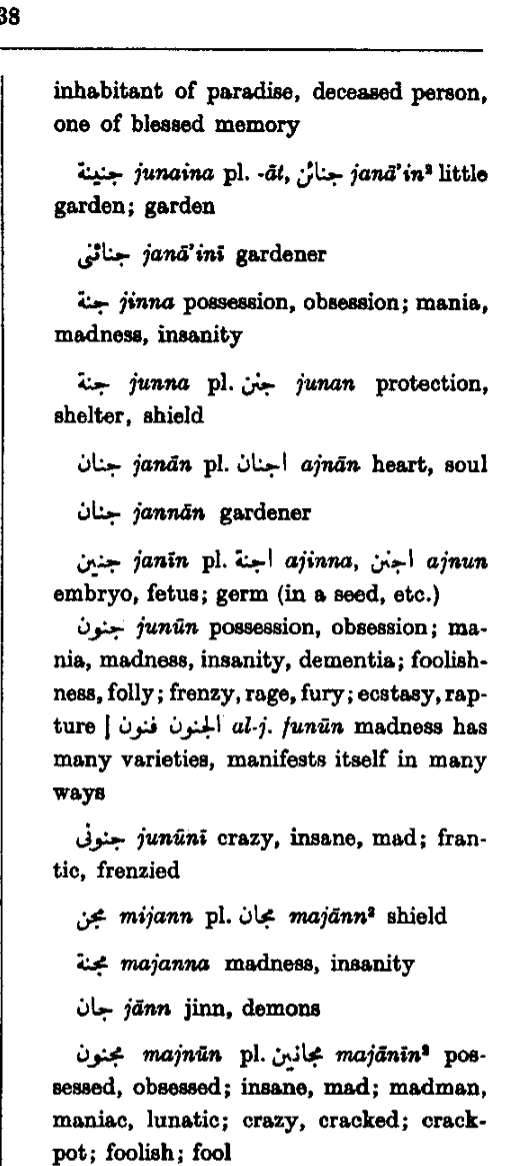
[C3]: Wehr, Hans. A Dictionary of Modern Written Arabic: Arabic-English. 4th rev. ed. Edited by J. Milton Cowan. Ithaca, NY: Spoken Language Services, Inc., 1976.
︎
[D1]: Lispector, Clarice. Água Viva. United States: New Directions, 2012.

[D2]: Acheampong, Michelle, “Kameelah Janan Rasheed on Learning and Unlearning,” Art in America, July 1, 2021.
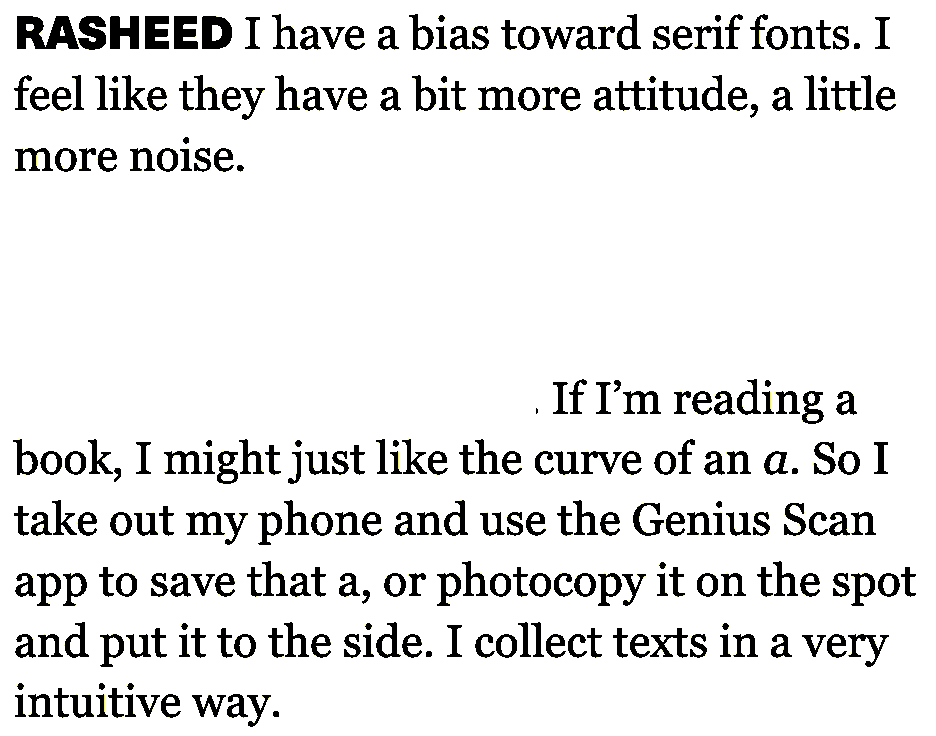
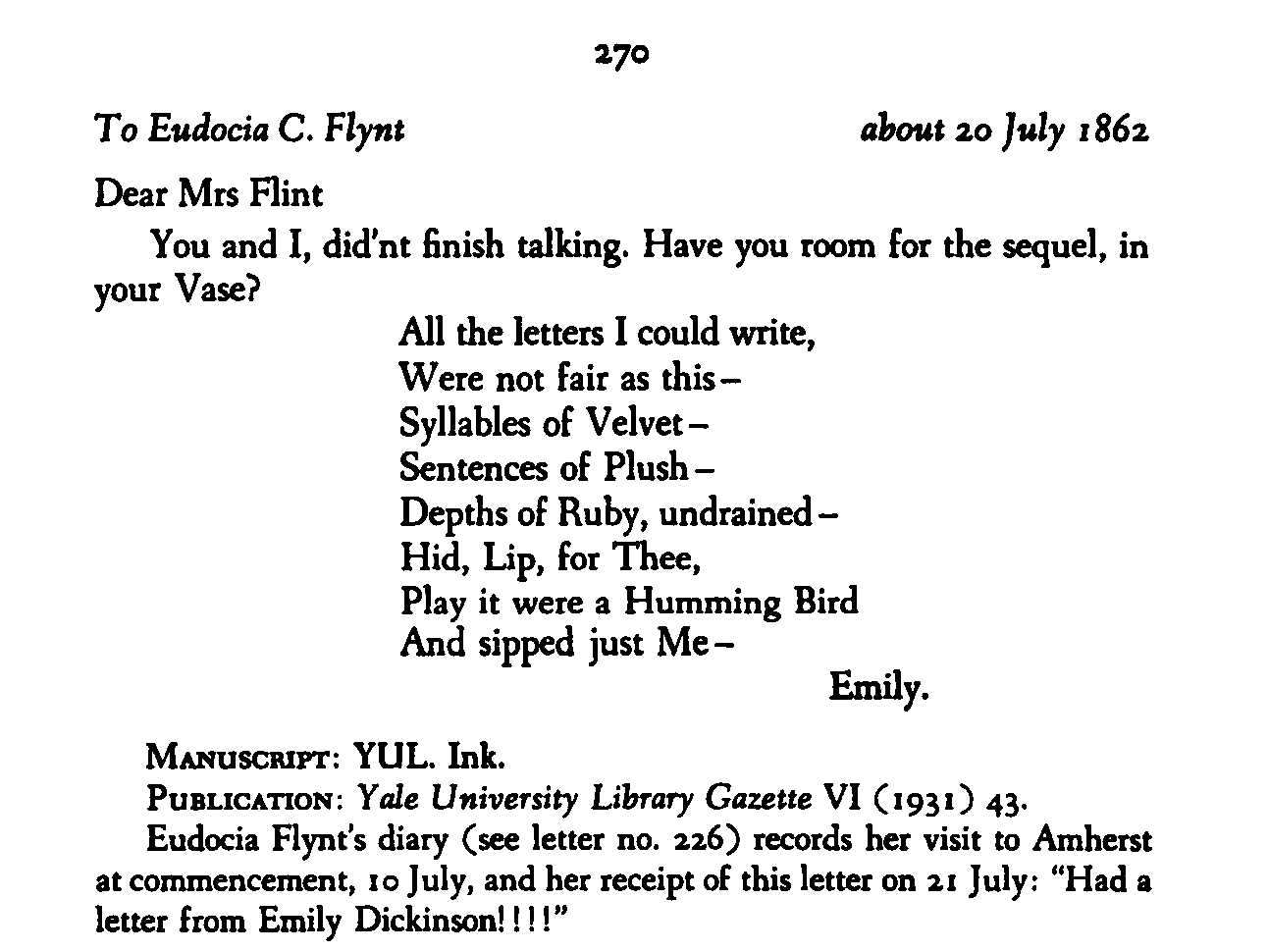
[D3]: Syllables of Velvet” and “Sentences of Plush” in Emily Elizabeth Dickinson’s 1862 letter to Eudocia C. Flynt.
[D4]: Rasheed, Kameelah Janan (2023)
︎
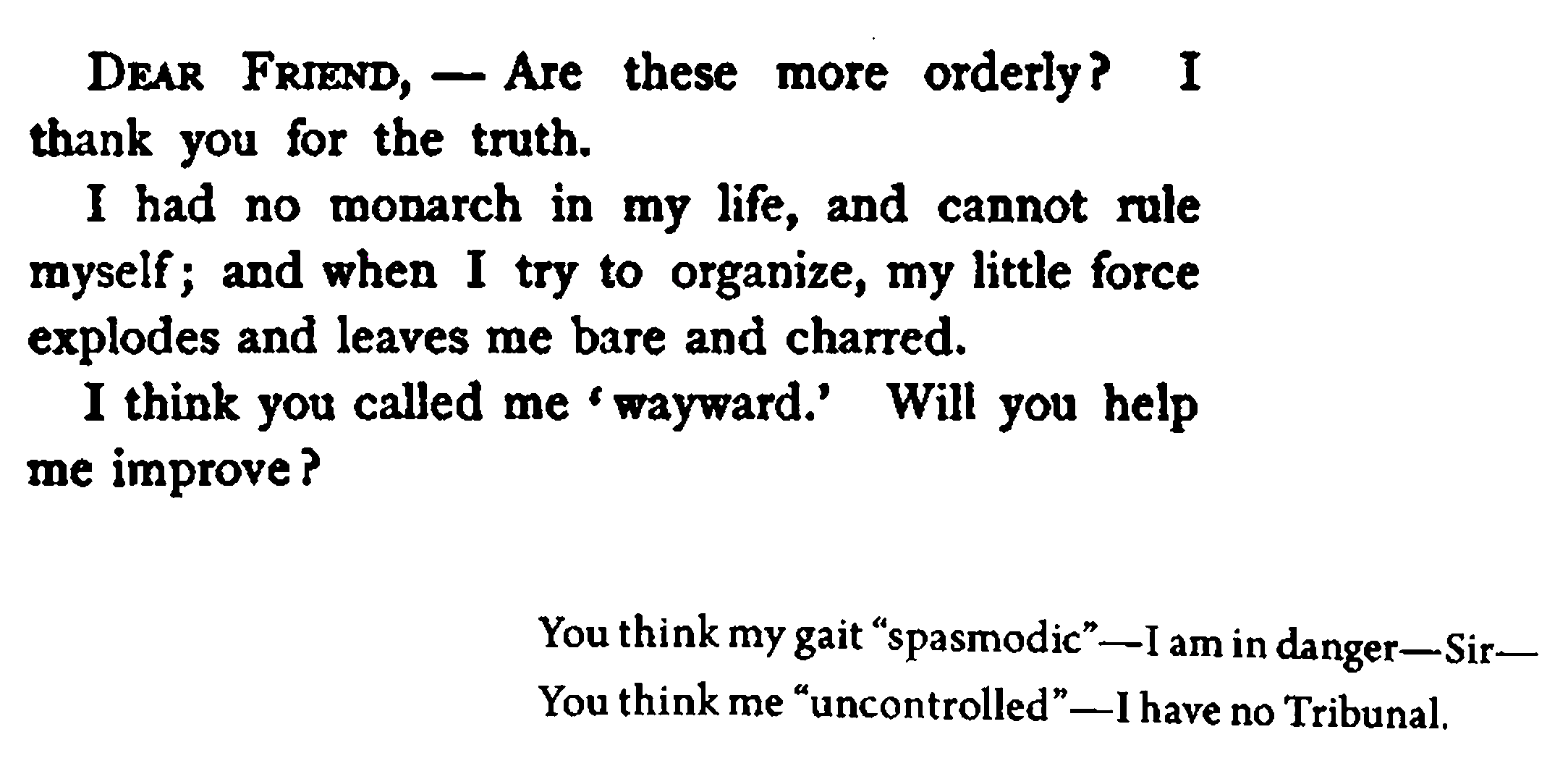
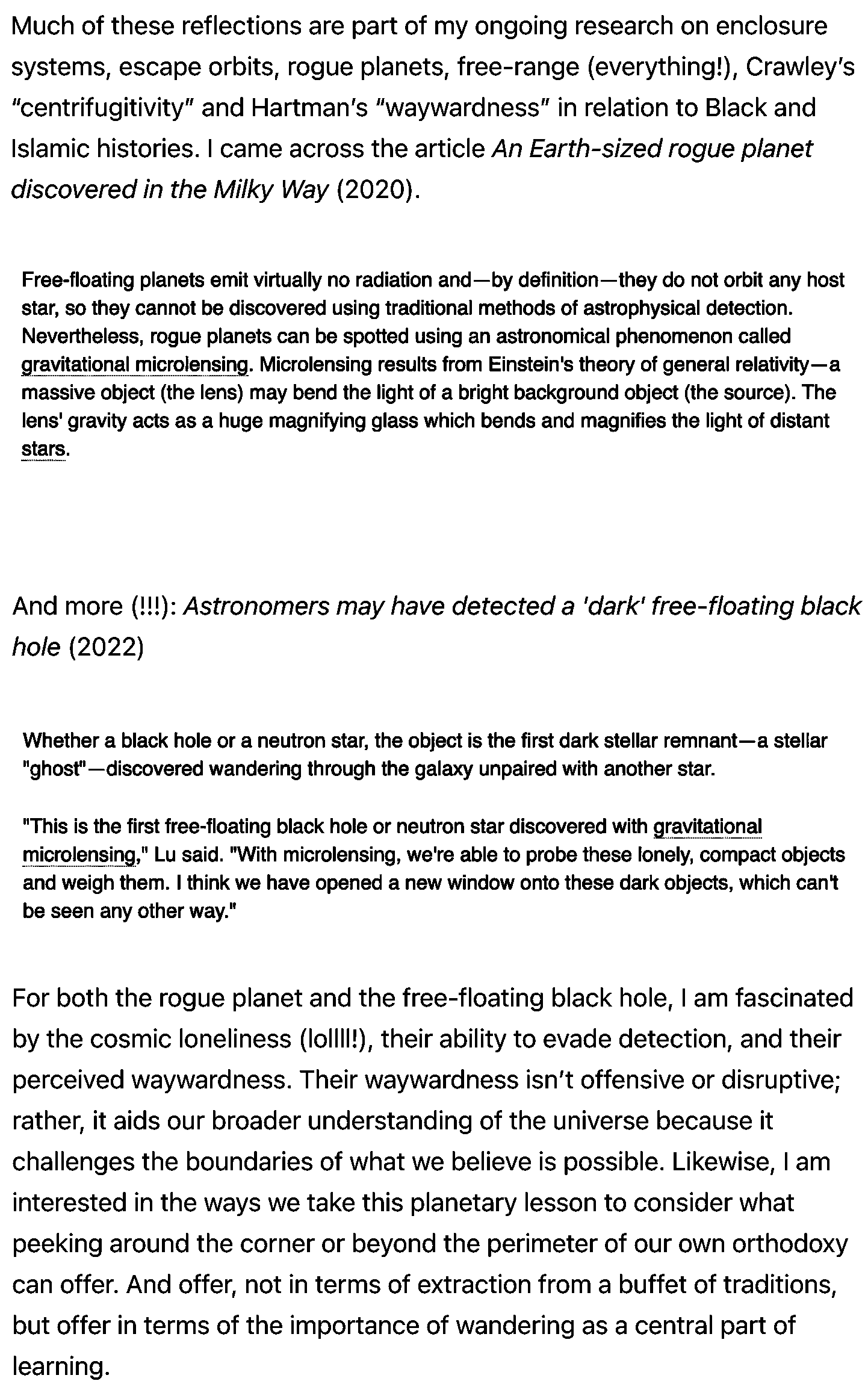
[E1]: Hartman, Saidiya. Wayward Lives, Beautiful Experiments: Intimate Histories of Riotous Black Girls, Troublesome Women, and Queer Radicals. United States: W. W. Norton, 2019.; Emily Elizabeth Dickinson’s Letters (The Atlantic, 1862, L271 and L265)

︎
[E2]: Rasheed, Kameelah Janan (2023; 2021)
︎

︎
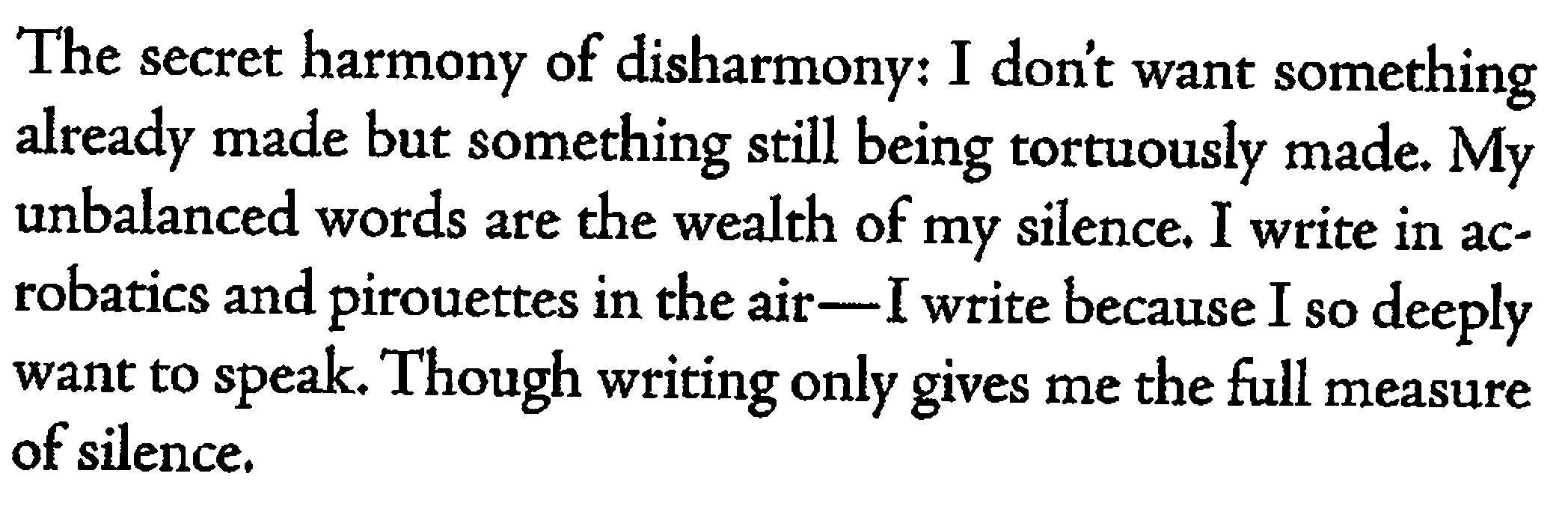
[F]: Lispector, Clarice. Água Viva. United States: New Directions, 2012.
︎
[G]: Emily Elizabeth Dickinson’s Letters (The Atlantic, 1862, L271 and L265)
︎
[H]: Renee Gladman and Fred Moten: One Long Black Sentence. United States: Image Text Ithaca, 2020.

︎
[I]: Imamura, “Escape Velocity,” last modified (n.d.), University of Oregon, accessed November 15, 2025, https://pages.uoregon.edu/imamura/121/lecture-4/escape.html

︎
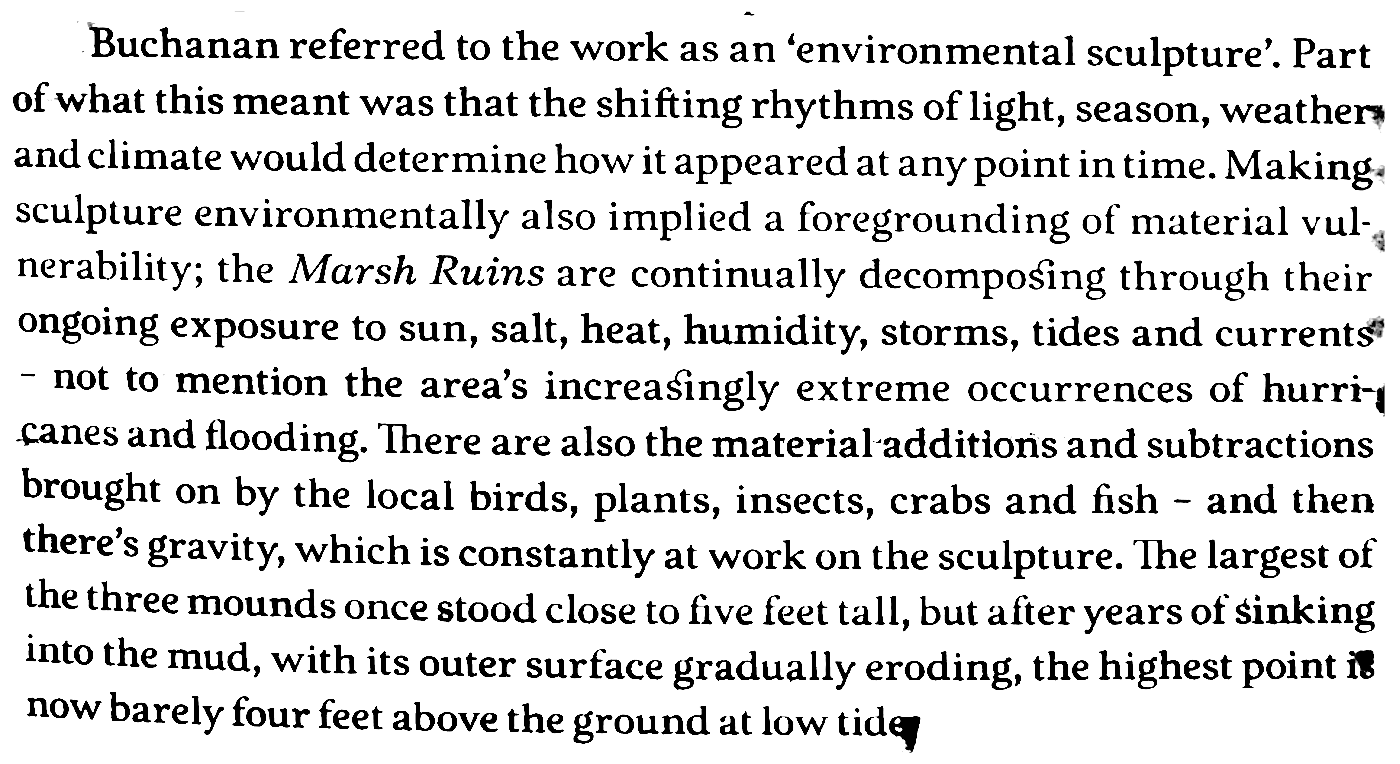
[J]: Groom, Amelia. Beverly Buchanan: Marsh Ruins. United Kingdom: MIT Press, 2021.
︎
[K]: Rasheed, Kameelah Janan (2020)

︎
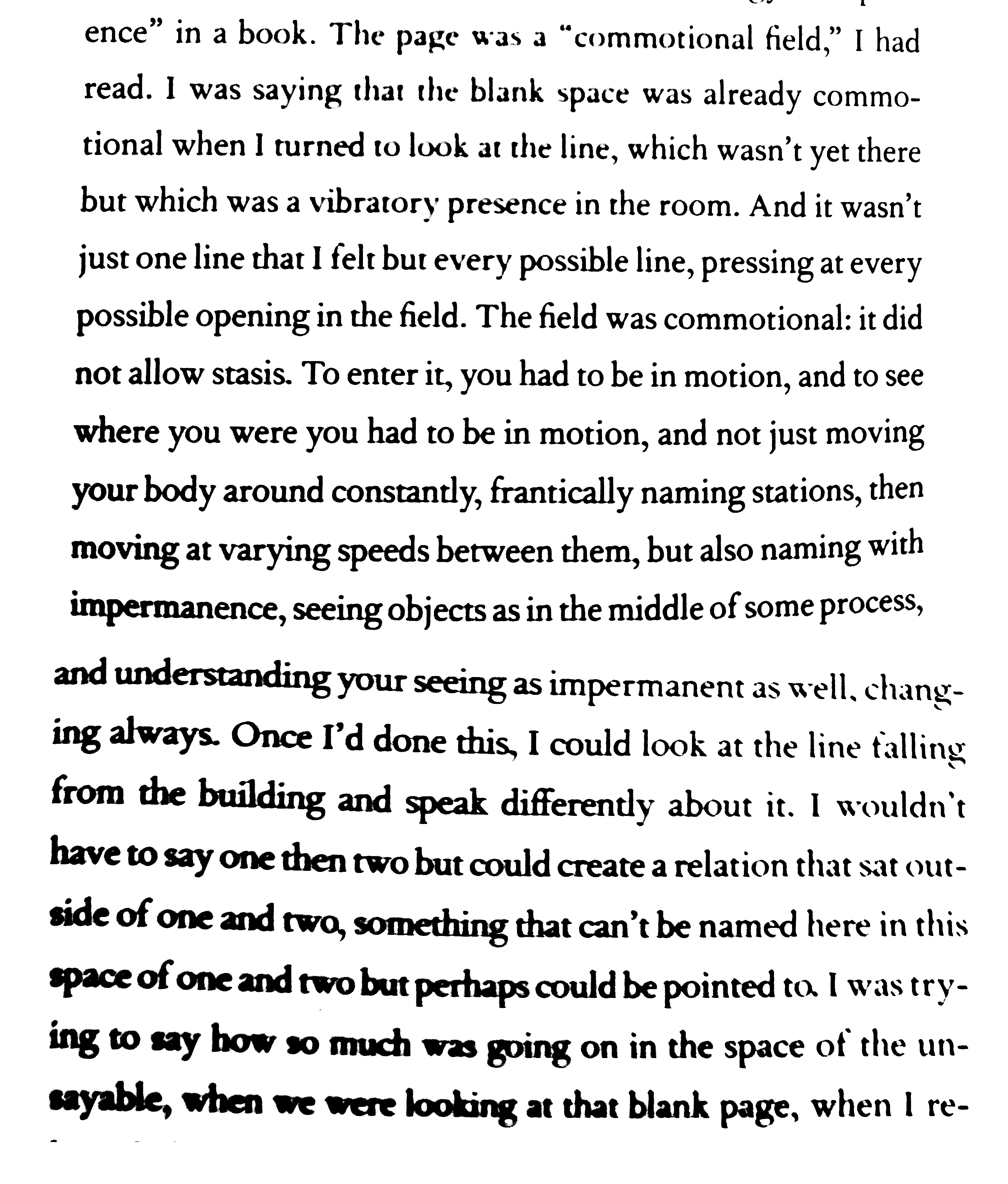
[L]: Gladman, Renee. Calamities. United States: Wave Books, 2020.
 While texting with a friend (writer Zoe Hopkins) and interlocutor for another project, I mentioned that the compositional field of Google Docs felt restrictive. I wanted to swell beyond the compositional field of the word processor, as I wanted to exceed the page, so I went to the walls. Across three frantic messages, I shared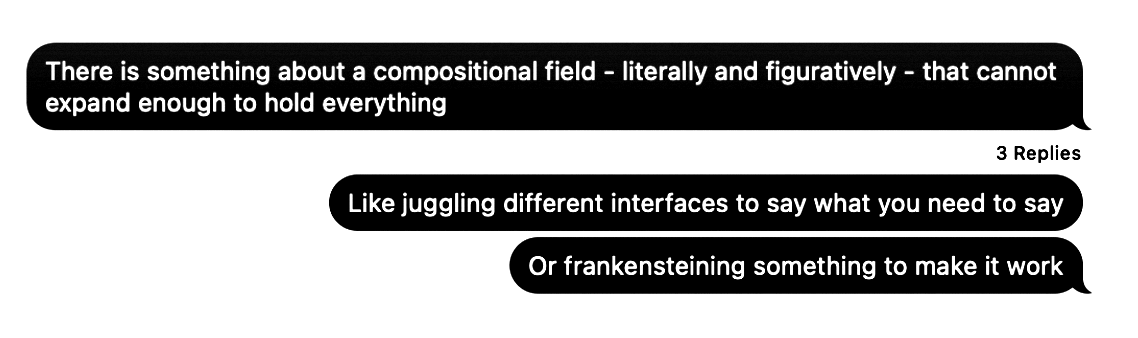
In this meandering, she asked if I’d heard of Renee Gladman’s “commotional field” in Calamities (2016). I had not. To be honest, I felt betrayed, not from this friend, but of myself. I’d purchased Calamities years ago, and in working my way through a stack of books, I had not reached the shore of this text. I grabbed the book off my “need to read” shelf and began to read frantically. The commotion is riotous and disobedient. The compositional field refuses to settle. A compositional field speaks to the environment in which the writing occurs. Gladman’s articulation is almost an exponential expansion – that the compositional field has energy and affordances.
︎
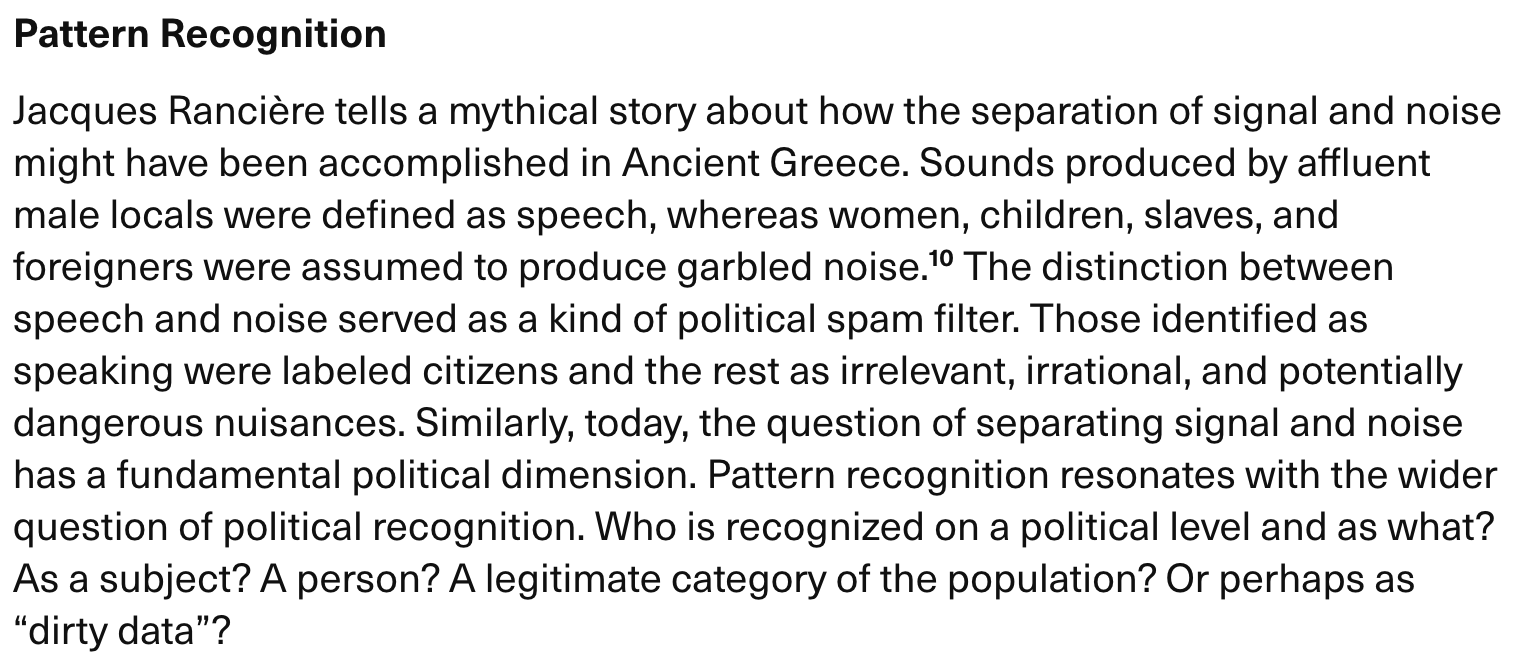
[M]: Steyerl, Hito. “A Sea of Data: Apophenia and Pattern (Mis-)Recognition.” E-Flux, April 2016.
︎
[N]:

︎
︎
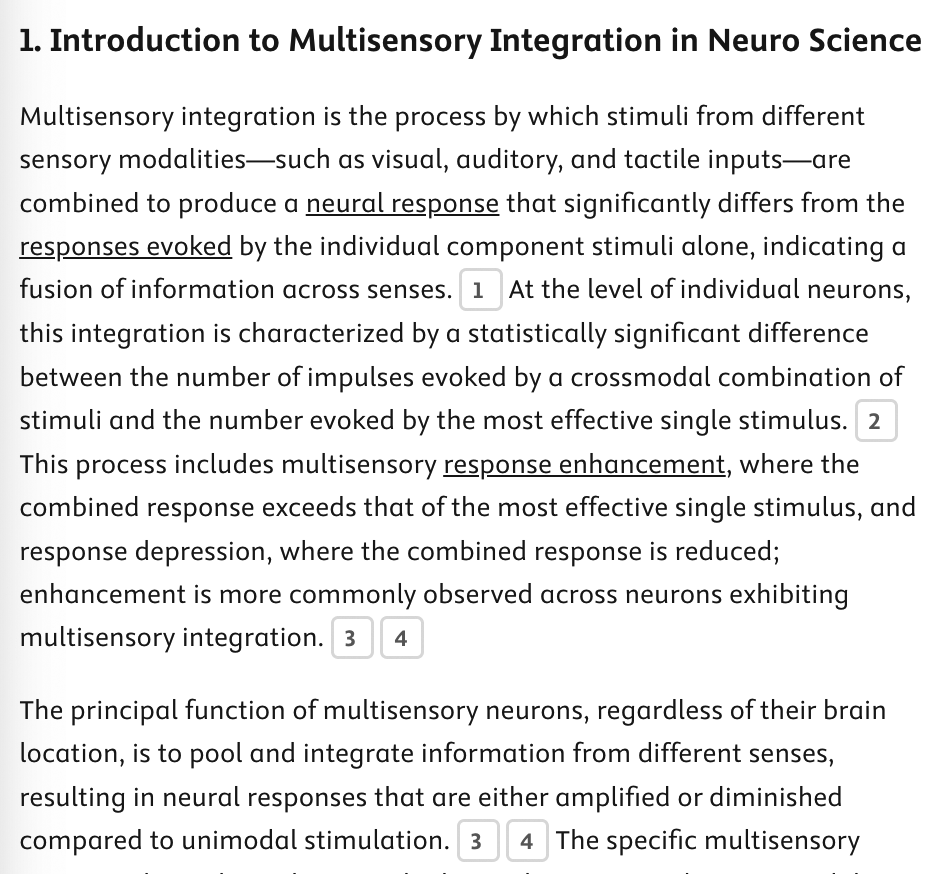
[P]: “Multisensory integration — Neuroscience.” ScienceDirect. Accessed December 1, 2025. https://www.sciencedirect.com/topics/neuroscience/multisensory-integration.

How to Cite this Page: Rasheed, Kameelah Janan. “Work Statement: slow and sprawling,.” KJR Studios Website. Accessed Month Day, Year.
https://kameelahr.com/Work-Statement-sprawling
Last Updated: 1 January 2026

I write to you from my evolving learning
 Lispector, Clarice. Água Viva. United States: New Directions, 2012.
This is a draft; a work in perpetual progress
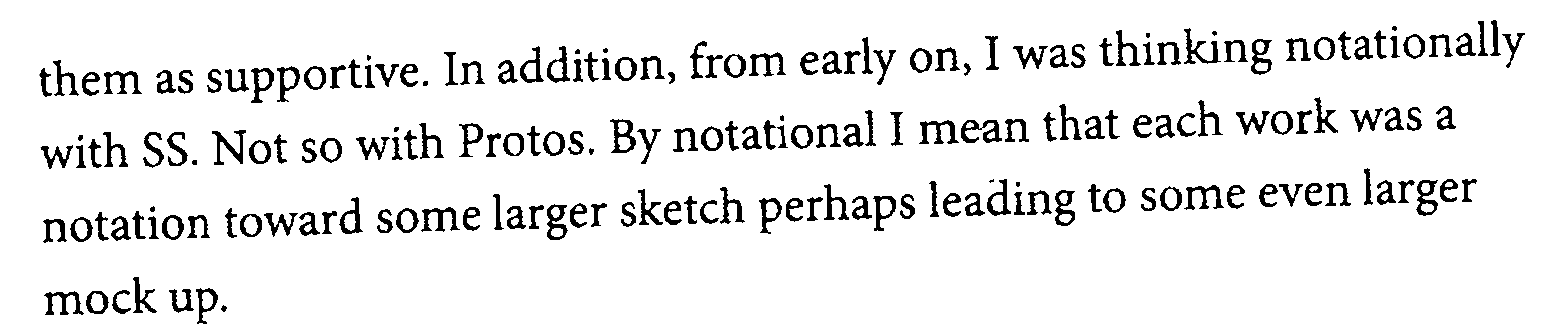

Pope.L. Proto-Skin Set. New York, NY: Mitchell-Innes & Nash, 2017.
Description is a betrayal; a losing battle
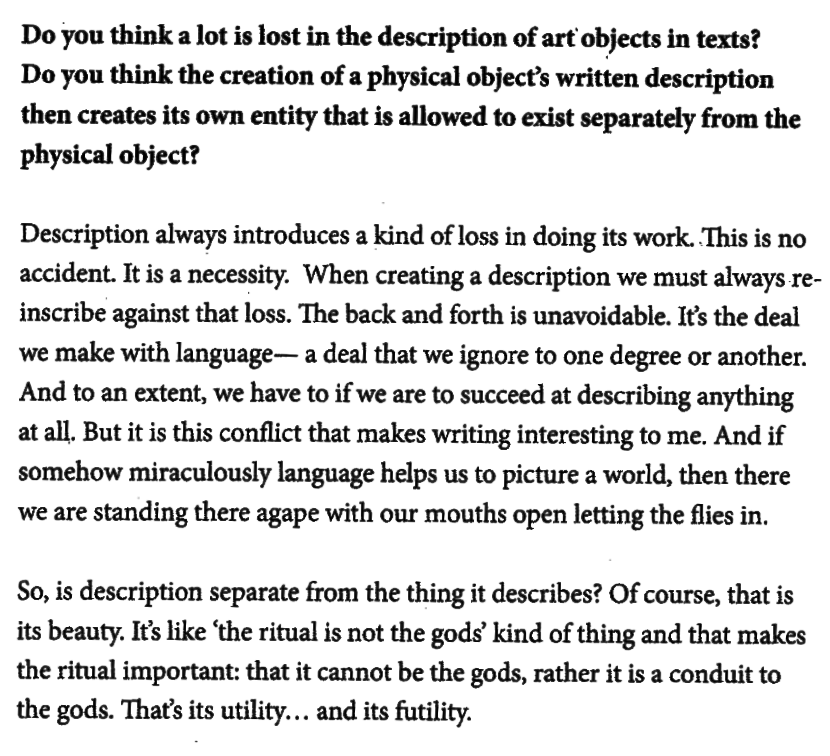
Pope.L. Proto-Skin Set. New York, NY: Mitchell-Innes & Nash, 2017.
Completion is not the goal

Wikipedia: https://en.wikipedia.org/wiki/Category:Dynamic_lists .
I am trying to write something
ergodic
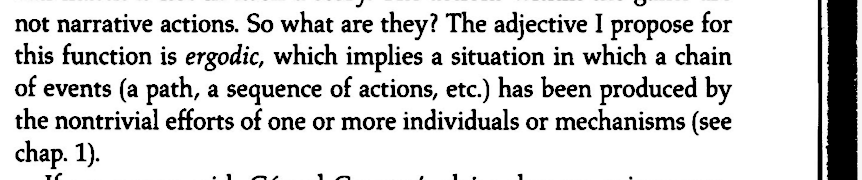 Aarseth, E. J. (1997). Cybertext: Perspectives on Ergodic Literature. United Kingdom: Johns Hopkins University Press
And I own the failures.
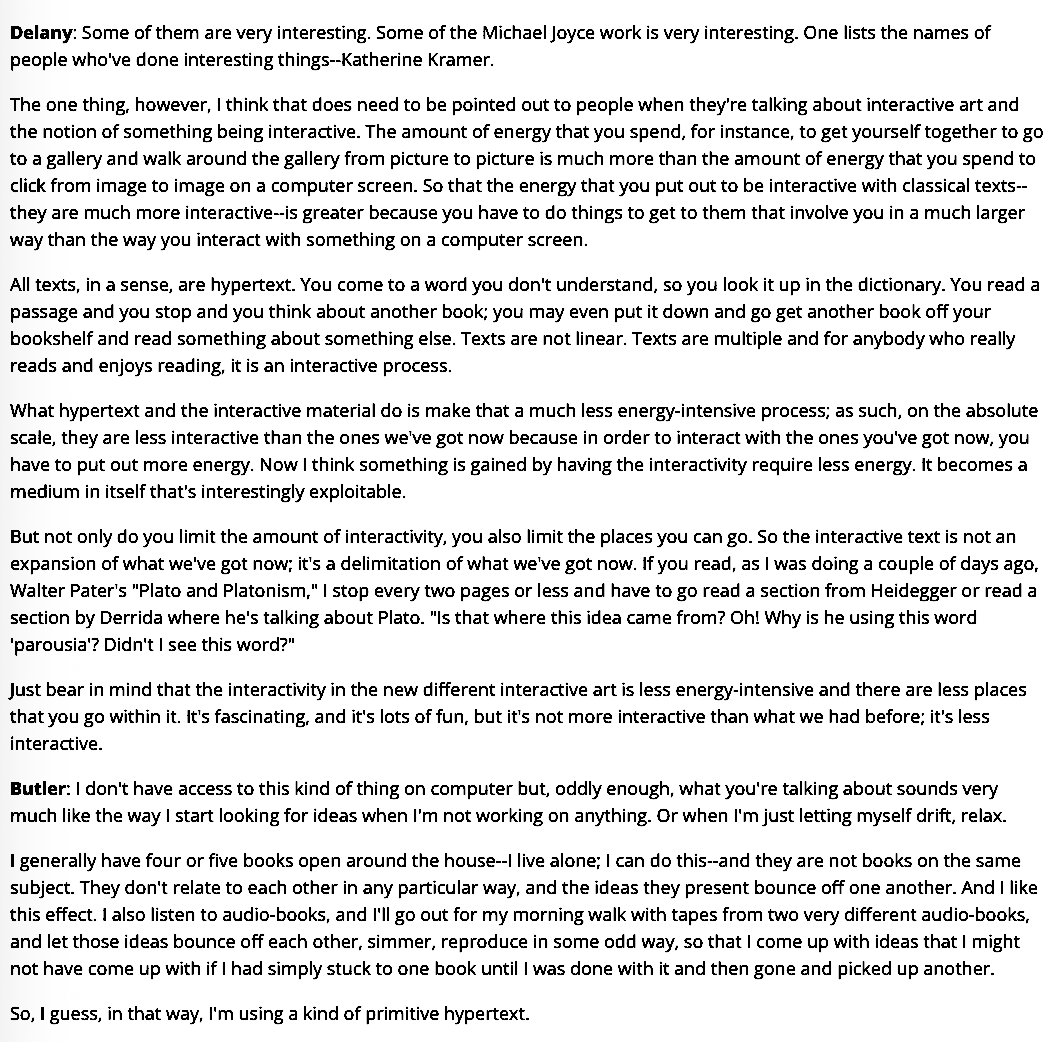
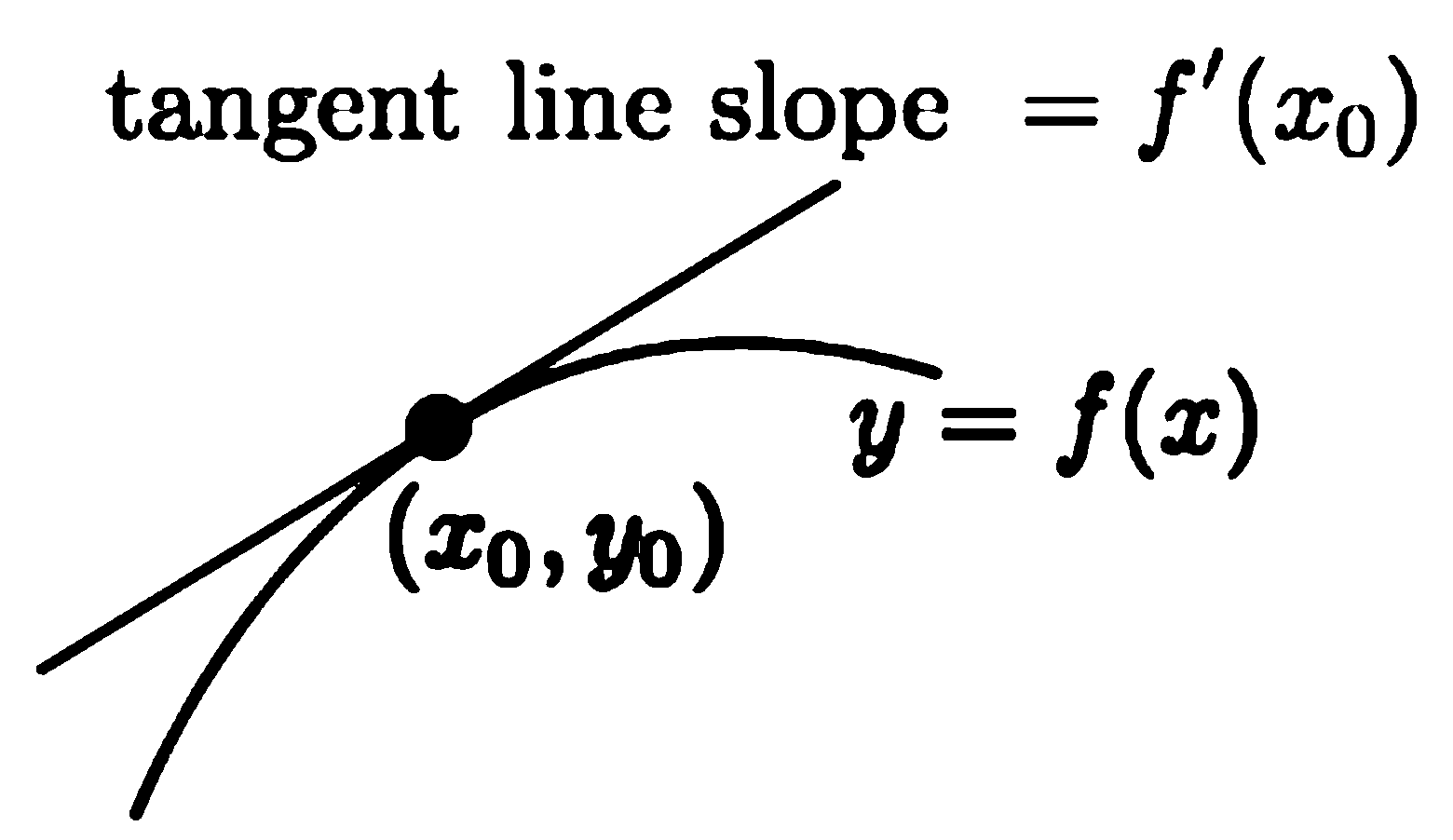
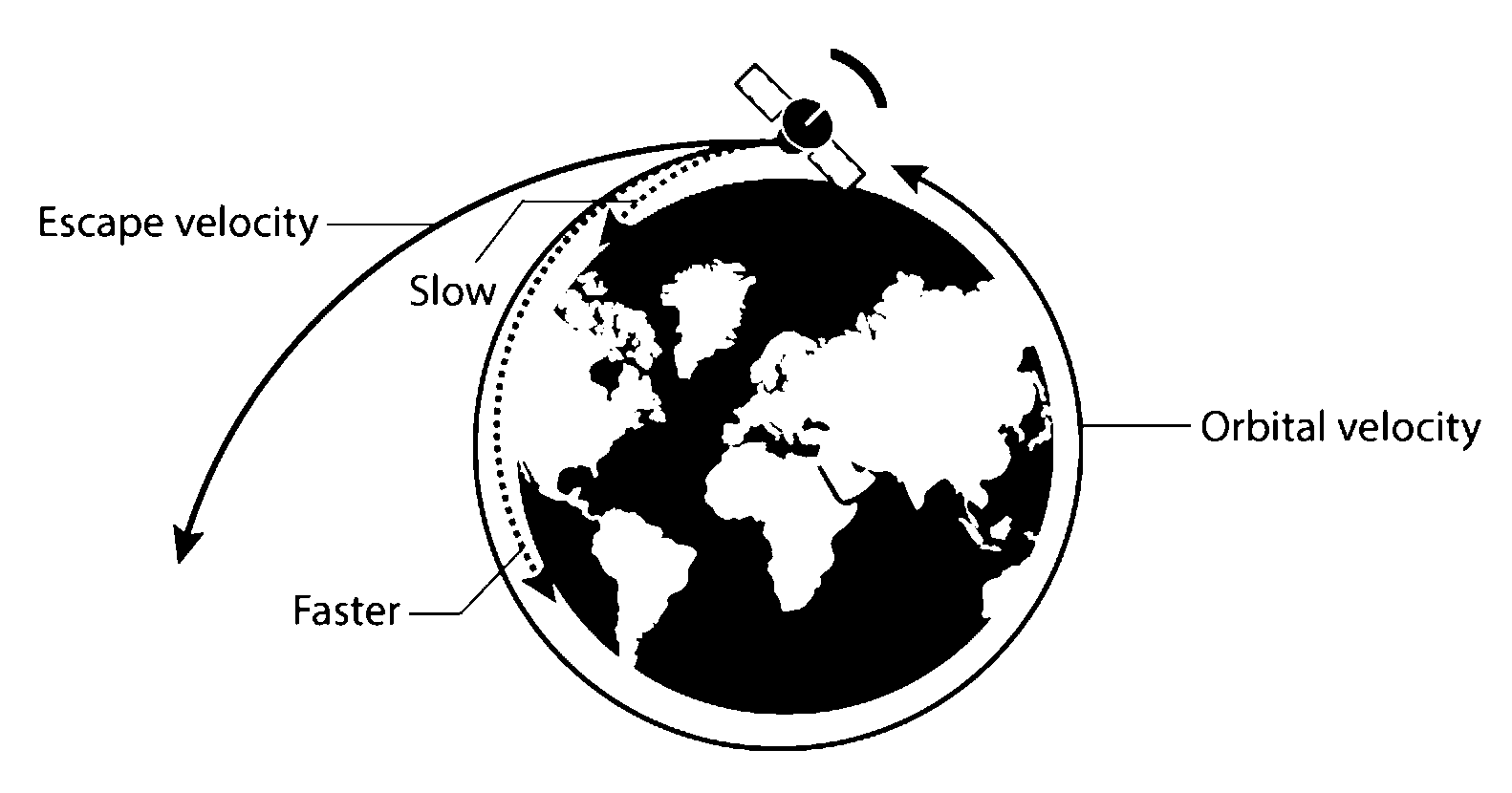
Tangent or Escape Orbit
Inferential Walk
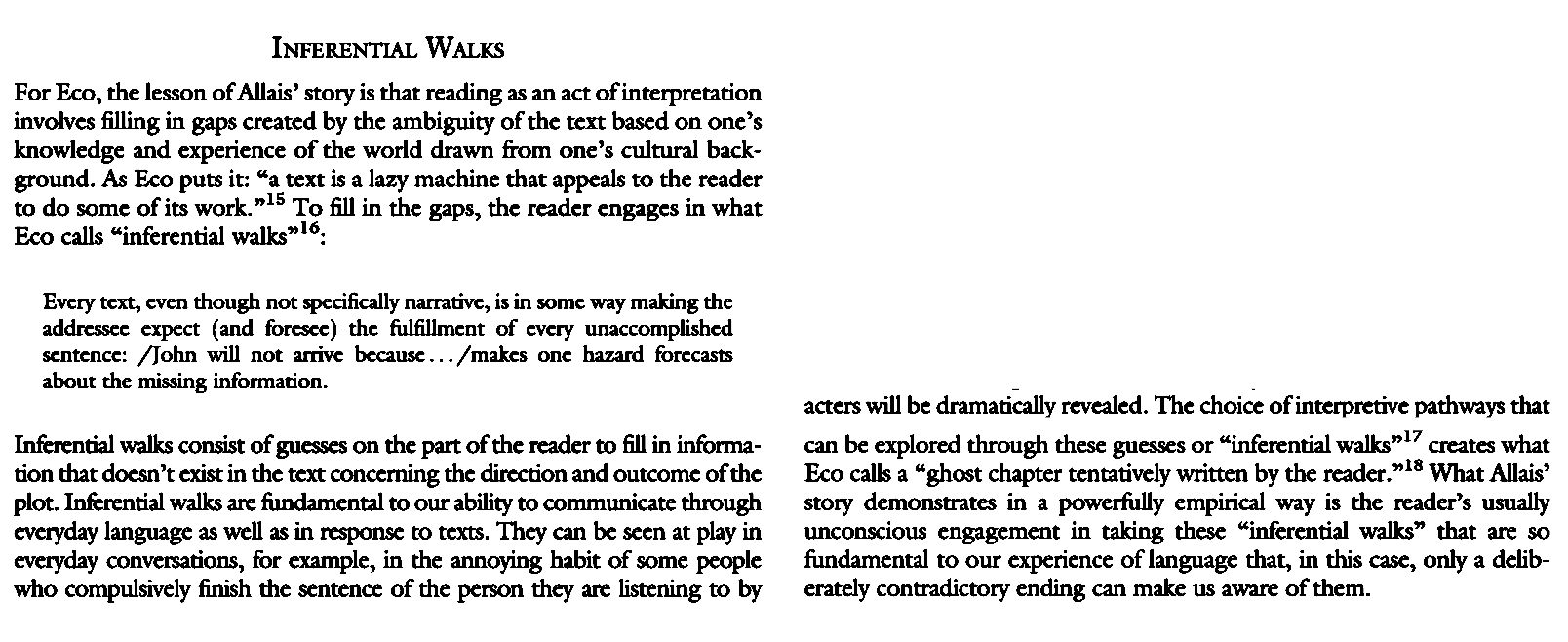 Merrell, Douglass. Umberto Eco, The Da Vinci Code, and the Intellectual in the Age of Popular Culture. Germany: Springer International Publishing, 2017.
Table of Contents

















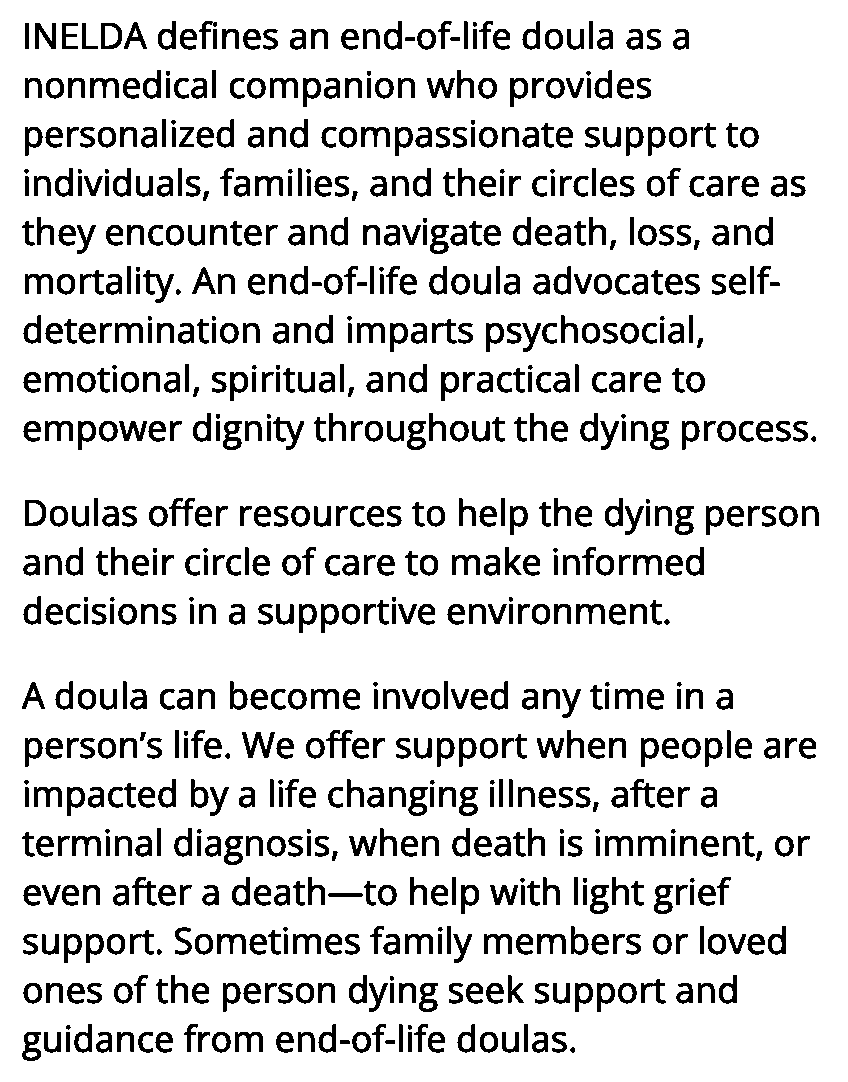
I am a learner [A] and a death doula [B] in training.
My middle name, Janan, meaning heart and soul, comes from the Arabic trilateral root [C1] (J-N-N / جنان) [C2, C3], evoking for me that which is unmoored, veiled, and wayward.
My middle name, Janan, meaning heart and soul, comes from the Arabic trilateral root [C1] (J-N-N / جنان) [C2, C3], evoking for me that which is unmoored, veiled, and wayward.
I explore the poetics and politics of non-compliance and
disobedience
With an eye toward West African Sufi practices, quantum mechanics, the lineage of “two-headed” Black woman spiritual leaders, and destructive plasticity (Catherine Malabou), I consider what becomes possible through disobedience:
+ when matter “misbehaves” (exotic matter and multiphase materials)
+ when words are non-compliant (non-traditional language practices)
+ when neurology does otherwise (my trinity of neurodivergence: ADHD, OCD, and Autism)
+ when bodies are “undisciplined” (questions of “ugliness” and physical disabilities)
+ when beliefs exceed their imposed limits (the birth of new spiritual movements).
Through intentional and accidental acts of disobedience, I am curious about the emergence of systems and methods that ask us to reconsider our relationship to plot, rationality, and stability.
across written, spoken, and visual language.
I consider the
radical possibilities
I am curious about the threads of disobedience and noncompliance – a refusal of stable meaning – as a rehearsal for otherwise worlds. Rehearsal as an antecedent to the “event” – a space to troubleshoot, but also, rehearsal in the Motenian sense of collaborative and ongoing knowledge-building within community – to study “under the name of speculative practice.”
In The Undercommons: Fugitive Planning & Black Study (2013), an interview with Fred Moten, Stefano Harney, and Stevphen Shukaitis is featured, in which Moten and Harney discuss their collaborative writing process. Shukaitis asks, “...when you pick up a text that’s finished, unless you’ve got some special texts that I don’t know of, you don’t get a sense of the playing or the living usually [...] which I would agree with you is the most important thing – somehow gets lost along the way. How do you negotiate that? Or is there a way to flag up, in a written text, ‘don’t take this too seriously, go out and play with it’?” Harney responds:
Well, one way that I do that is by revising how I say things. So, some people might call my style repetitive, partly because I’m rephrasing things all the time, but also because I’m trying to show that I’m playing with something rather than that it’s finished [...] it’s partly to say that we’re in rehearsal here [...] So, for me, it must be right there in the writing in some form. It’s not enough to signal it outside the writing, to send the piece out and to say, ‘oh, really this is still open for this or that.’ It has to be somehow in the writing itself that the thing hasn’t closed off. Part of that is that to write with another person is, in a sense, always to keep something open, because you always have the question of, “do they both think that way, who said that?” Instead of worrying about that, I think that’s nice. That means that the text is already open to more than one, in that sense.
of noise, unintelligibility, and discrepancy.
While [writing] serves as a point of departure in my work, it is not the purpose of this experiment.
The embrace of nonsense and irrationality in the face of rationalized violence is not solely an aesthetic intervention; it is also a political gesture that, at the very least, exposes the violence of what has been sanctioned as coherent, logical, and natural.
| back to the top |
What can emerge in the
shadow
something like collective shadow work?
of the seemingly absurd or incoherent?
Coherence and logic overdress the sentence, building a thick membrane that disinvites deviation. The absurd can undress the word (and the world), creating a more porous membrane that allows contamination, a slow erosion of the seam, and a collision of edges.
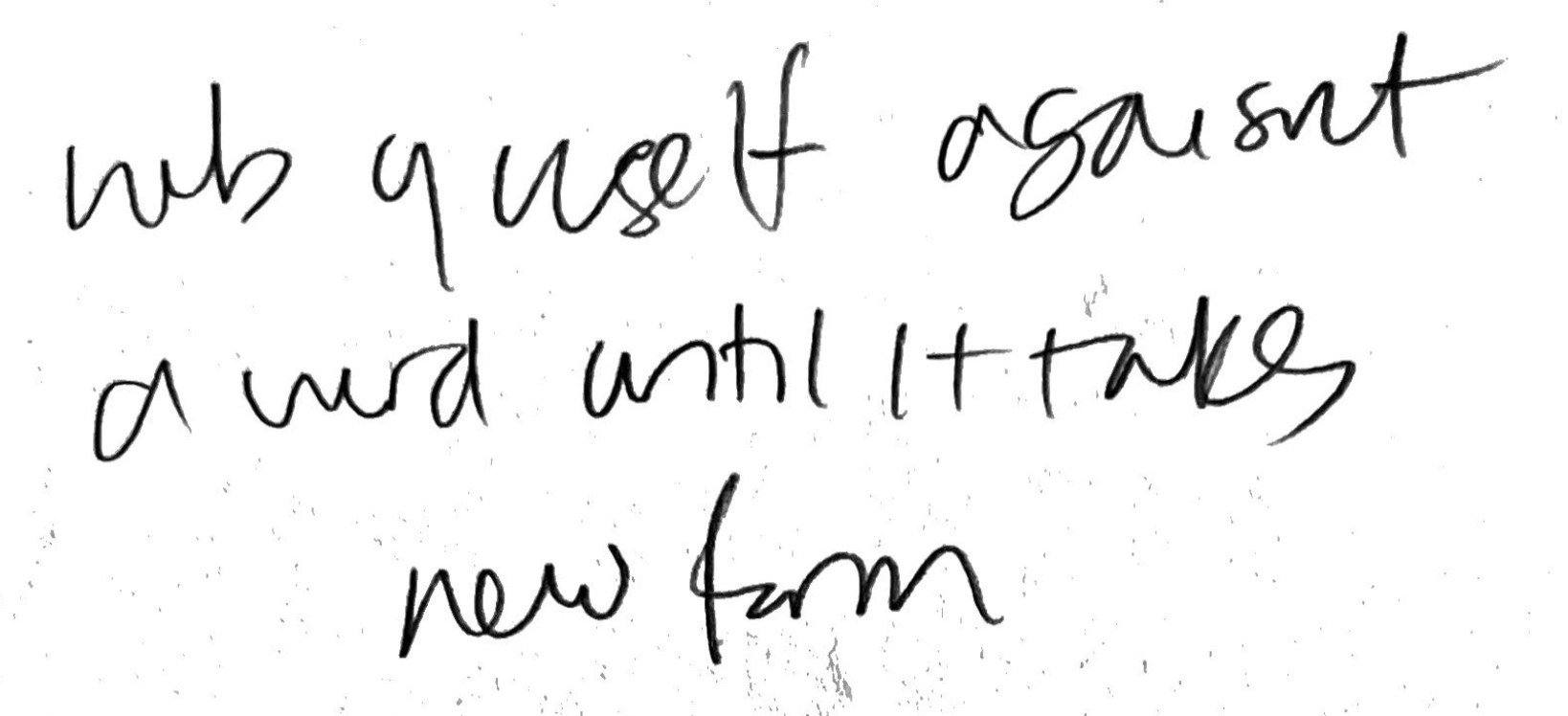
I examine the materiality[D1, D2, D3, D4] of wayward [E1, E2] language: acrobatic sentences [F] (Clarice Lispector); anarchical stanzas with no recognized monarch [G] (Emily Elizabeth Dickinson); phrases with trapdoors or underground railroads [H] (Fred Moten); runaway syllables that scatter to the marooned edges of a page; words that escape the orbit [I] of their mother sentence; footnotes that consume their reference; and ecstatic outbursts that dissipate before being recorded.
The [page] (or other stage for language) substrate, surface, stage (a context for something to happen); it isn't just paper or a wall -- it is all the chemical, physical, and biological factors in relation to the writer, writing instrument, and marking material is a landscape of instability with its own lifecycle: an active, “materially vulnerable” (Amelia Groom) [J], vibratory [K] “commotional field” [L] (Renee Gladman).
The [page] (or other stage for language) substrate, surface, stage (a context for something to happen); it isn't just paper or a wall -- it is all the chemical, physical, and biological factors in relation to the writer, writing instrument, and marking material is a landscape of instability with its own lifecycle: an active, “materially vulnerable” (Amelia Groom) [J], vibratory [K] “commotional field” [L] (Renee Gladman).

Twisting against the circumference of a system creates excess: energy, sounds, marks, gestures, meanings, and affects that leak beyond their sanctioned limits.
This excess has other names:
noise, dirty data, unintelligibility, disfluency, discrepancy, disorganization
...those unassimilable bits.
excess: an amount of something that is more than necessary, permitted, or desirable.
leak: (written in 2021) - I want to offer leakiness as a liberatory technology--leakiness or the porous boundaries between rituals (syncretism); leakiness or the porous borders between bodies of text (intertextuality); leakiness or the porous boundaries between modes of communication (across language systems, across substrates, across species, across disciplines, across temporalities). Leakiness is a politics of intimacy: an invitation to wander and wade in the wet; to touch and make anew what has not been made solid; to [un]know and [un]learn; to return to the scene of presumed certainty for revision. Leakiness is a kind of interdisciplinarity, or a yearning to move, to be alive in many ways - to be without the grasp of a body of knowledge or a narrative arc. It is to be imminent in ways that exceed the predictability of a singular discipline.
leak: (written in 2021) - I want to offer leakiness as a liberatory technology--leakiness or the porous boundaries between rituals (syncretism); leakiness or the porous borders between bodies of text (intertextuality); leakiness or the porous boundaries between modes of communication (across language systems, across substrates, across species, across disciplines, across temporalities). Leakiness is a politics of intimacy: an invitation to wander and wade in the wet; to touch and make anew what has not been made solid; to [un]know and [un]learn; to return to the scene of presumed certainty for revision. Leakiness is a kind of interdisciplinarity, or a yearning to move, to be alive in many ways - to be without the grasp of a body of knowledge or a narrative arc. It is to be imminent in ways that exceed the predictability of a singular discipline.

And in an increasingly automated society driven by the logic of efficiency at all costs, this excess must be “dealt with” through the disciplinary technologies of standardization, compression, containment, and annihilation.
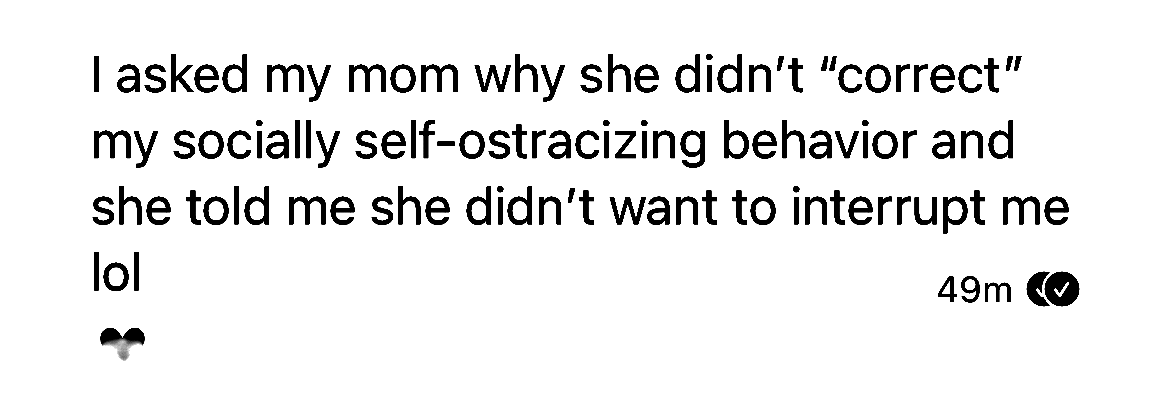

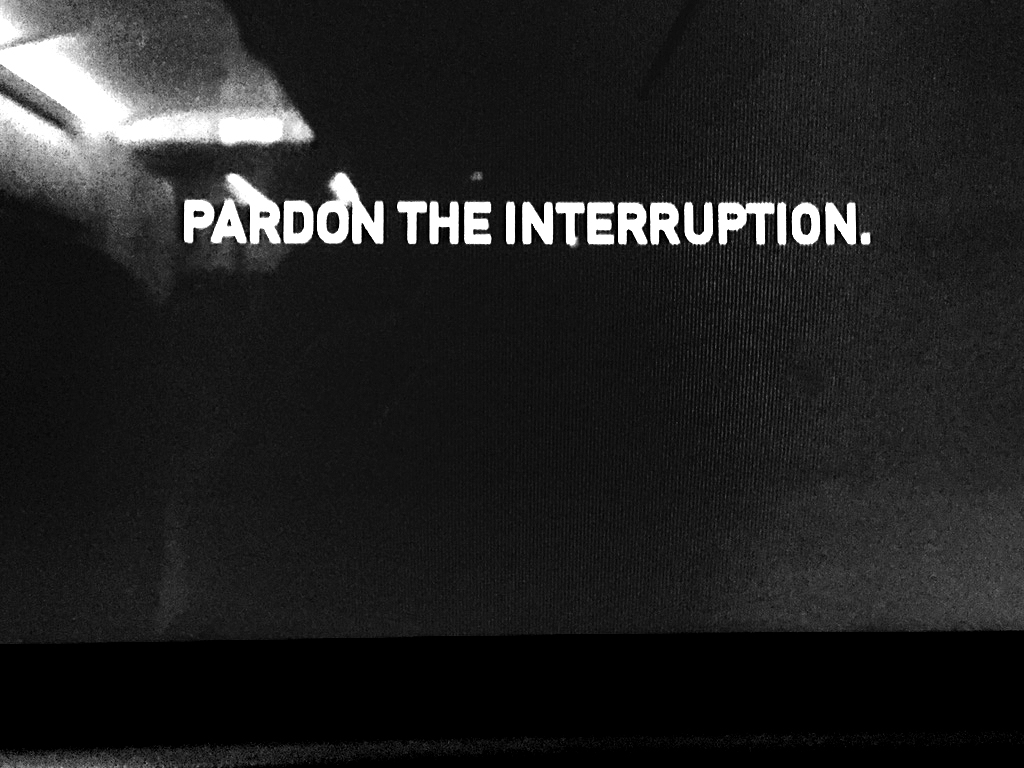
There is always a sanctioned plot...
... to follow, always consequences for disobedience...When you hop off the teleological train headed to wherever has been deemed an acceptable destination, you fall into a void of unintelligible noise. Unreadable and unreachable. That void is out of sight. How convenient is that? You can’t see me. You can’t find me. I am not showing up in the database. There is a glitch. There is a 404 error.
From 29 December 2025 newsletter
From 29 December 2025 newsletter
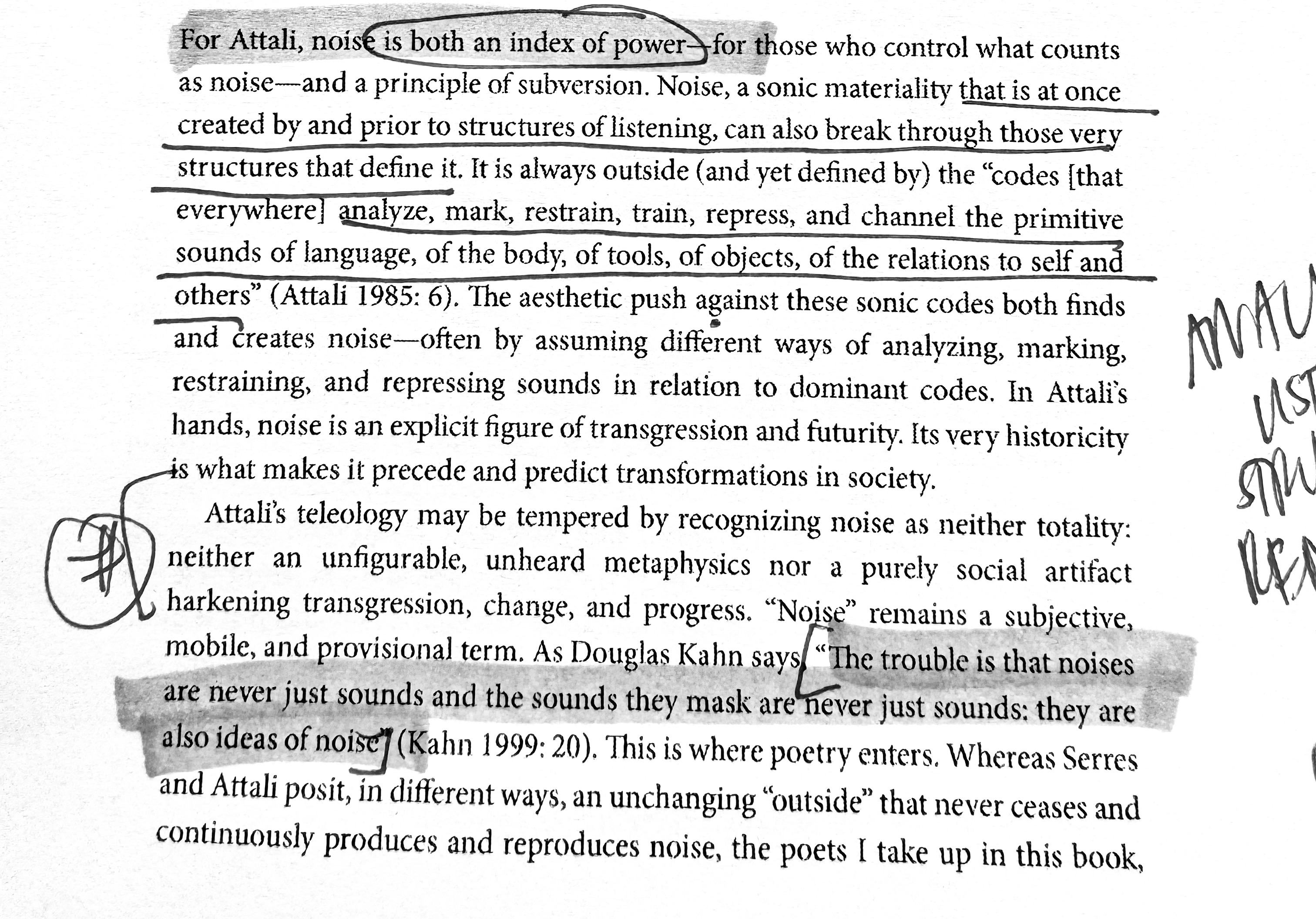
As John Melillo writes in The Poetics of Noise from Dada to Punk (2021),
 Lispector, Clarice. The passion According to G.H.. United States: University of Minnesota Press, 1988


Genette, Gerard. Paratexts : thresholds of interpretation. United Kingdom: Cambridge University Press, 1997.
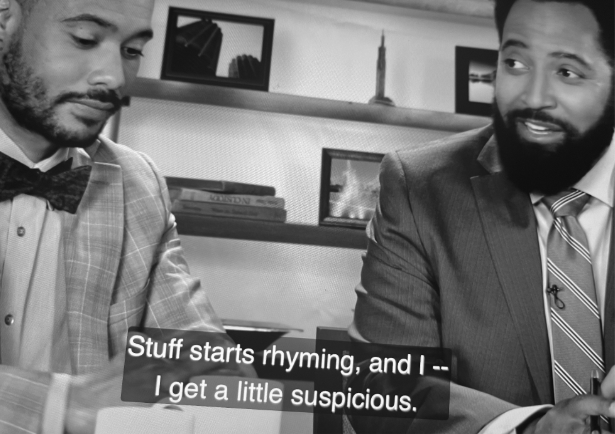
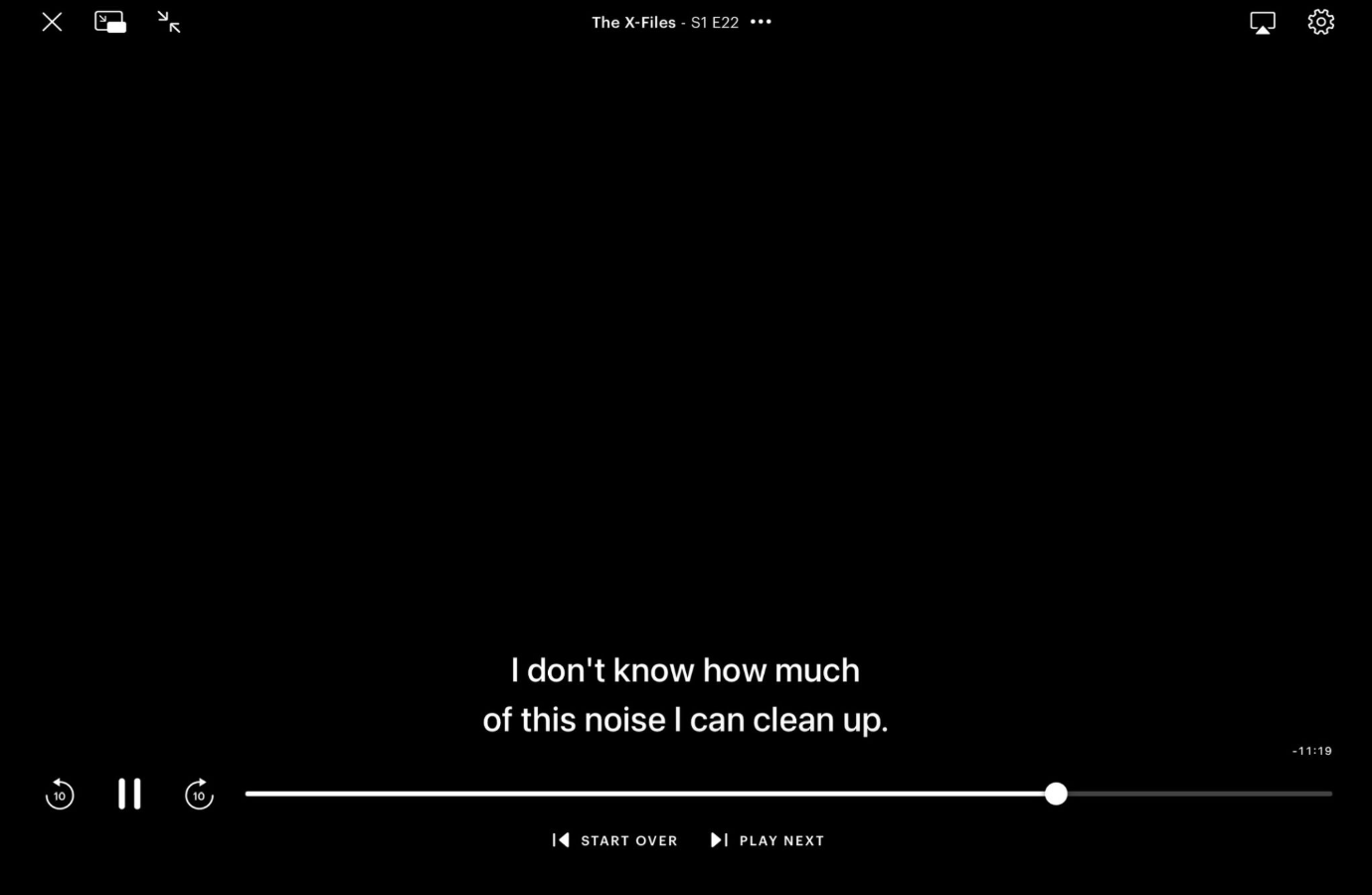
Noise is a context for learning more about my relationship to plot, rationality, and immediacy:
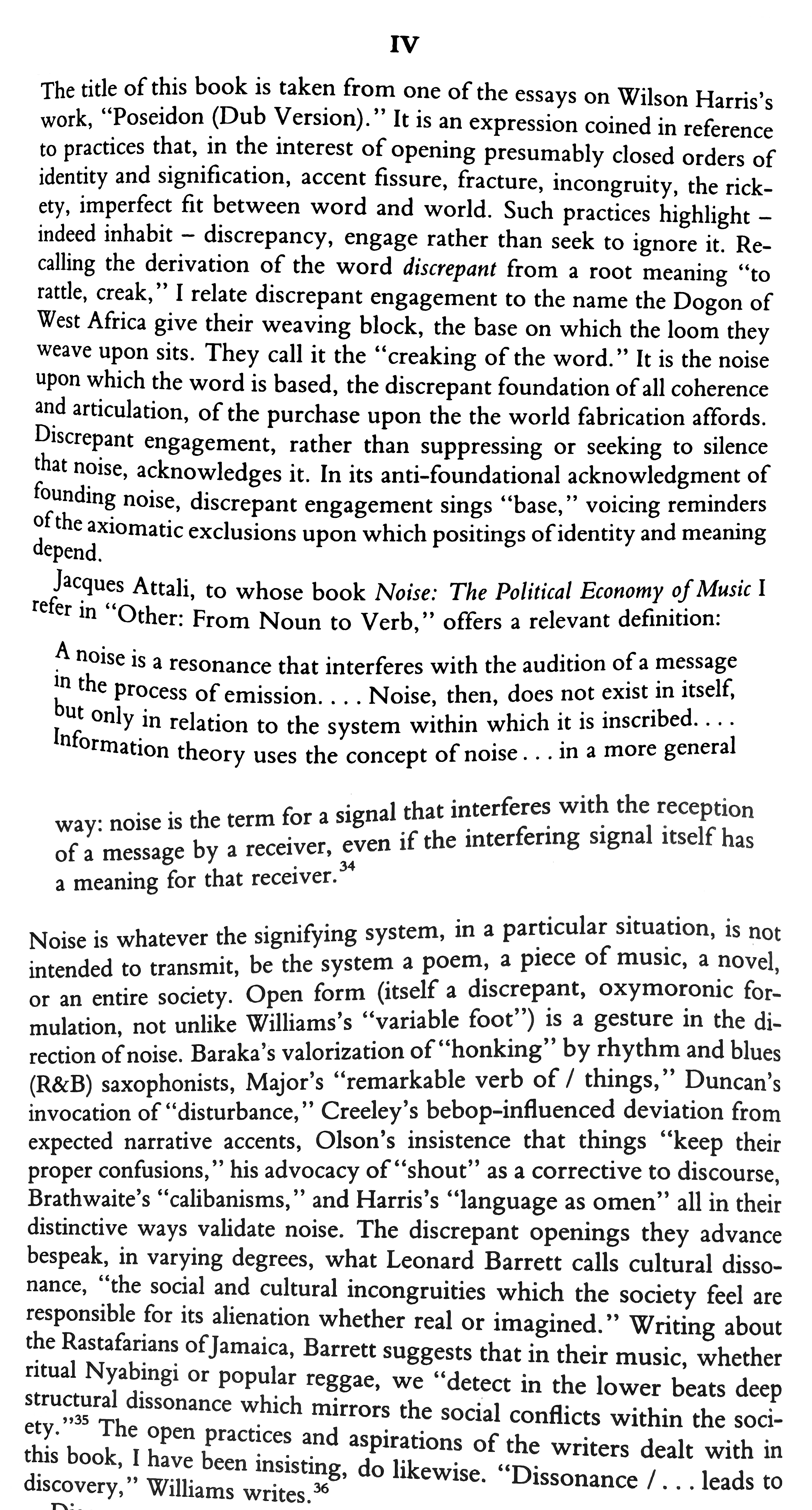



My first conscious encounter with disciplinary technologies of noise suppression was in my high school English Literature class. My writing was always considered engorged and unruly. I spent hours editing. It was my jetsam, words and syntax, I had to “throw overboard” to make it to the other side of a well-structured essay.
![]()

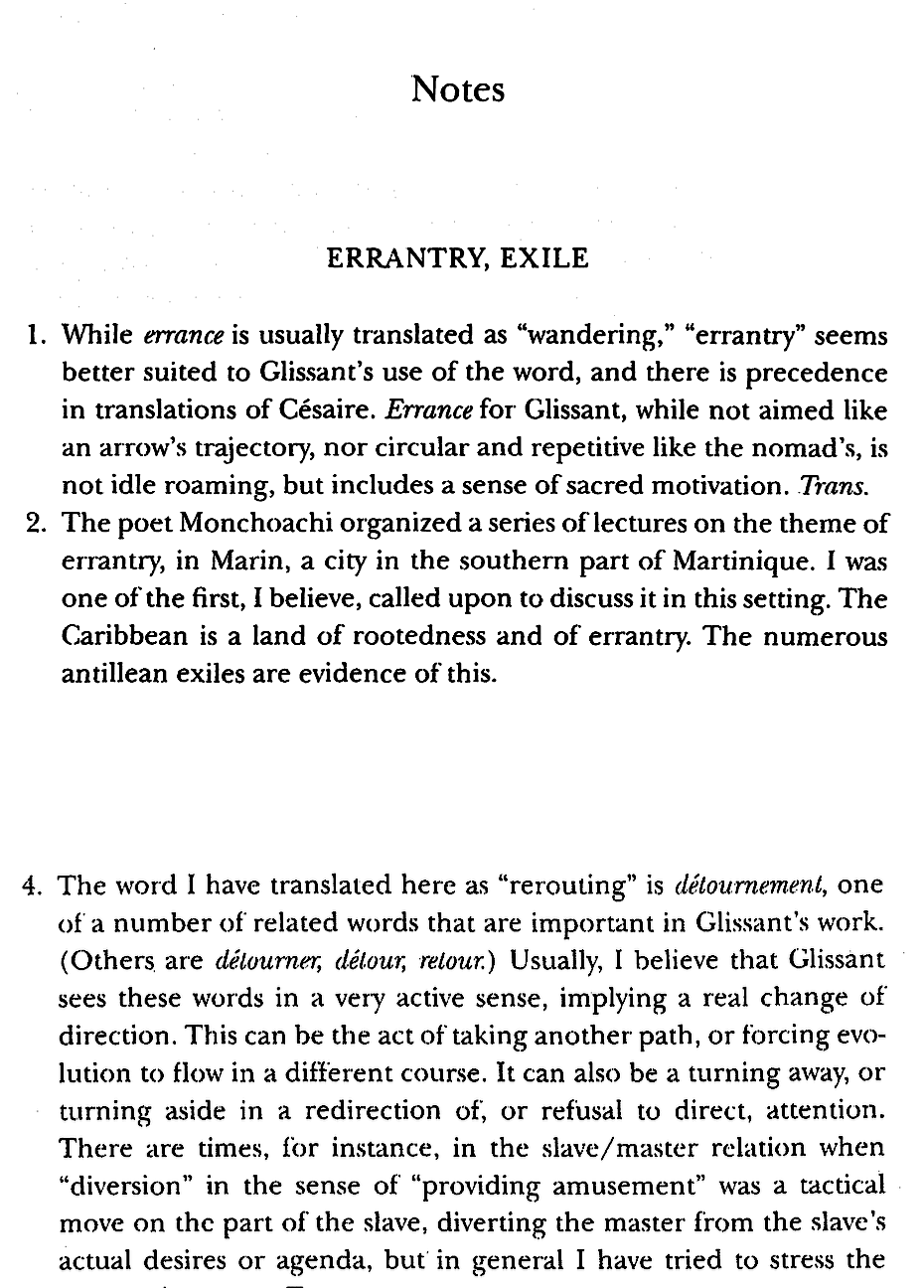
ectopic[N] —language?
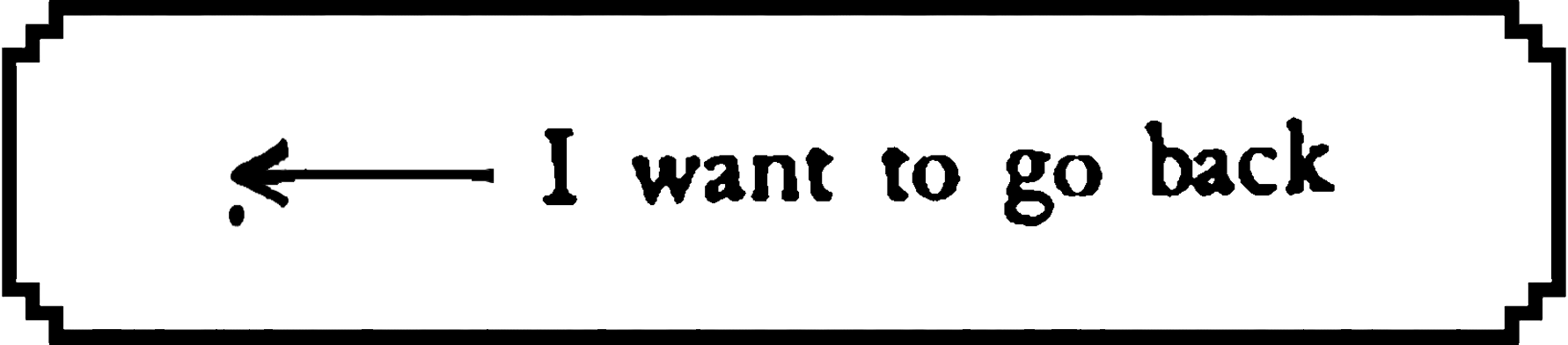
Lately, I’ve been thinking a lot about reclaiming my jetsam – like going and getting back what I left behind, to see if, maybe, something is there. I remember learning about the Adinkra symbol, sankofa. It was introduced to me as a retrieval process – “to return, go, fetch” or “it is not taboo to go back for what is forgotten.”
Last year, while teaching, I suddenly introduced sankofa to my students as a form of revision – that we go back and “fetch” what may have been there all along, but not perceivable, abandoned, or even plunked from our hands. Our relationship to immediacy, efficiency, and use value often means that, if something (and/or someone) does not present obvious value, it is discarded.
As I wrote in a recent newsletter:
![]()
![]()
Last year, while teaching, I suddenly introduced sankofa to my students as a form of revision – that we go back and “fetch” what may have been there all along, but not perceivable, abandoned, or even plunked from our hands. Our relationship to immediacy, efficiency, and use value often means that, if something (and/or someone) does not present obvious value, it is discarded.
As I wrote in a recent newsletter:




On Infrasound
Tina Campt: Listening to Images
2017
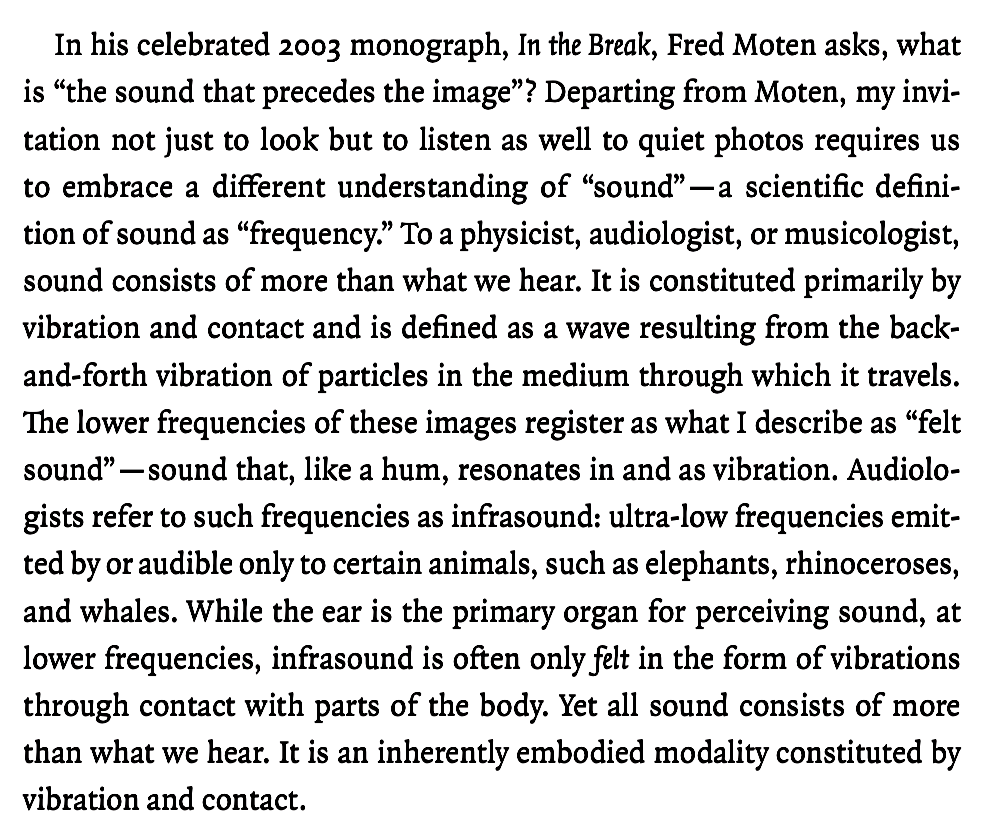
Notes: (Covert, Nested, Multi-modal)Sensory
Tina Campt reminds us that to look is also to feel. And this excerpt seems to call back to earlier conversations about noise - this assertion that there is more there (noise) than what we acknowledge (signal) and as Attali notes, “noise as an index of power.”
+ (Amended) notes from SFSIA Presentation on Wet Conceptualism (6 September 2025)
+ Also, has been thinking about James C. Scott’s writing on infrapolitics.

On Precovery
Nolan Oswald Dennis: Throwers (space-rock notes pt.1)
2025

[...]
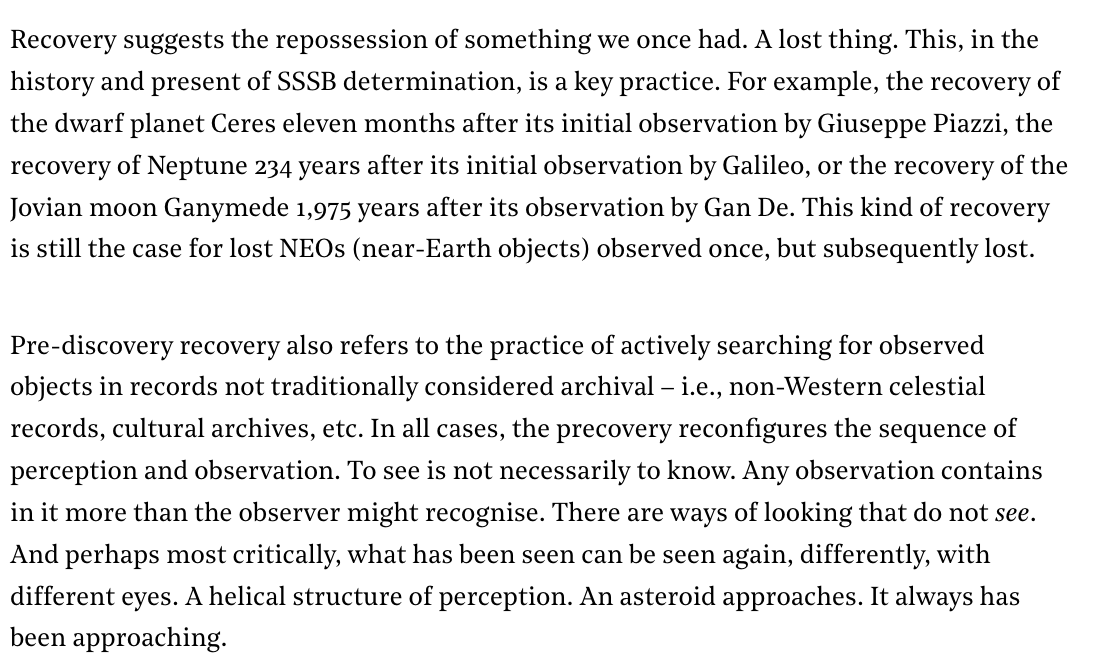
Notes on “BEEN”
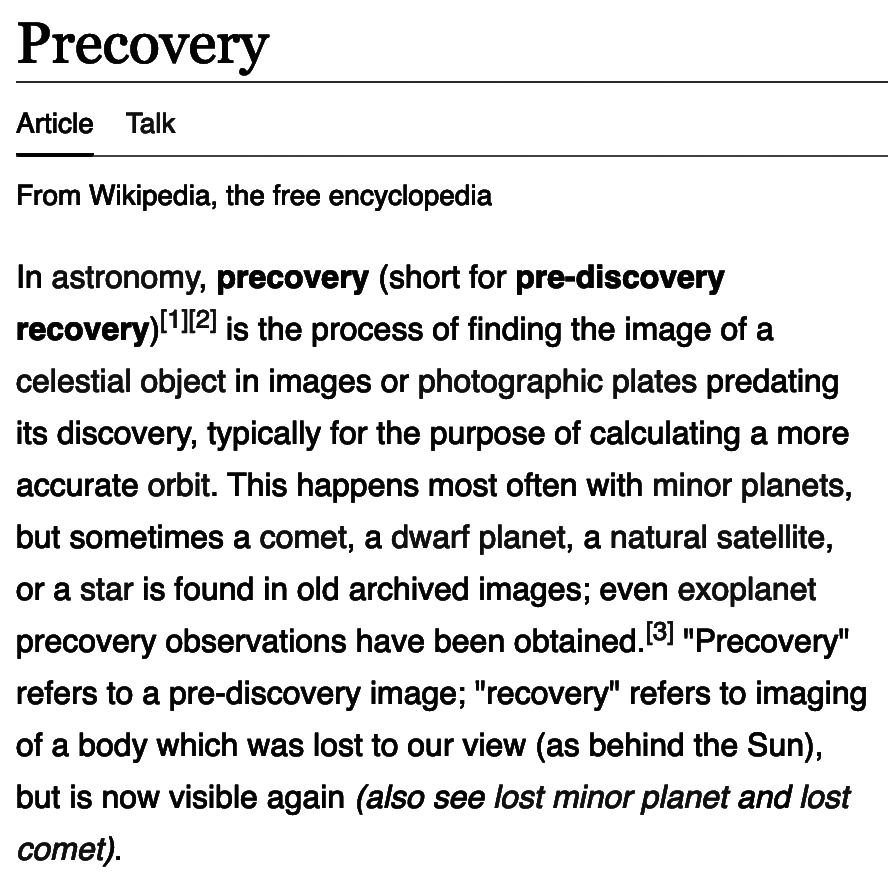
Dennis's “alter-perceptive programme” requires a different relationship to time: a “helical structure of perception.” As they write, “it always has been approaching.”
BEEN (in my local Black vernacular): "BEEN", or the habitual be, has been linguistically theorized as an indicator of habitual action and sometimes an indicator of someone's character (it happens so habitually that it has become a trait). Regionally and familially, we used the stressed form of BEEN to indicate an intuitive, somatic, or ancestral fact that remained unacknowledged until someone with power or status sanctioned it. It is an implicit indictment of which forms of knowledge and evidence are valued and a critique of how late everyone else is to arrive at what seems like an obvious understanding. For example, "we BEEN knew they weren't going to..." We also used the "BEEN" to call someone out for pretending they don't know something they actually know. For example, "you BEEN knew she wasn't going to..."
This last usage reminds me of Toni Cade Bambara's essay, "The Education of a Storyteller," in her 1996 posthumously published essay collection:
![]()
BEEN (in my local Black vernacular): "BEEN", or the habitual be, has been linguistically theorized as an indicator of habitual action and sometimes an indicator of someone's character (it happens so habitually that it has become a trait). Regionally and familially, we used the stressed form of BEEN to indicate an intuitive, somatic, or ancestral fact that remained unacknowledged until someone with power or status sanctioned it. It is an implicit indictment of which forms of knowledge and evidence are valued and a critique of how late everyone else is to arrive at what seems like an obvious understanding. For example, "we BEEN knew they weren't going to..." We also used the "BEEN" to call someone out for pretending they don't know something they actually know. For example, "you BEEN knew she wasn't going to..."
This last usage reminds me of Toni Cade Bambara's essay, "The Education of a Storyteller," in her 1996 posthumously published essay collection:
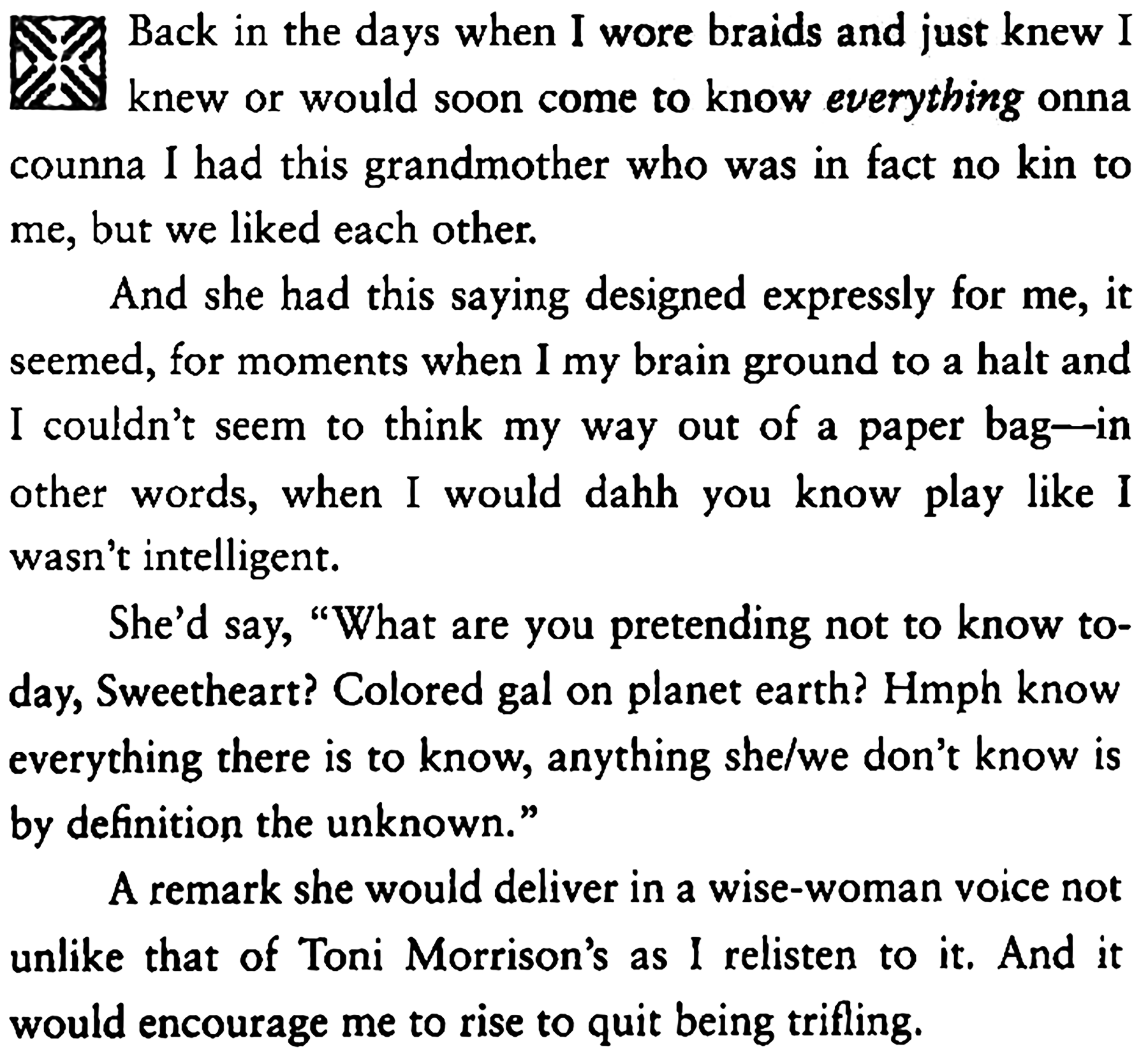

On Defamiliarization, Unseating of Logic
Leonard Diepeveen: Introduction Gertrude Stein’s Tender Buttons
2018

Notes: Defamiliarization
From Warren Neidich's review of the 2024 Whitney ISP show, Not Everything is Given
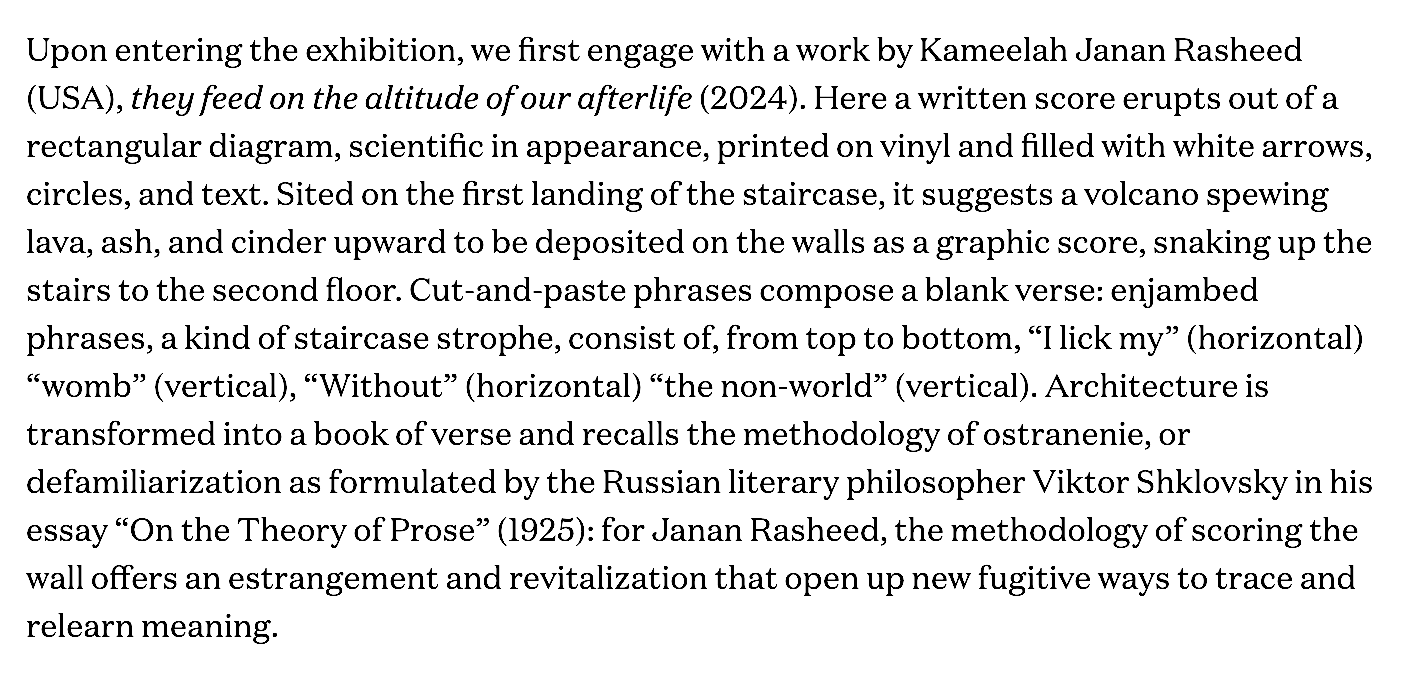
ostranenie! Counter-habituation!
I had the pleasure of reading some draft writing about my work and the author used the word “defamiliarization” to describe my work. Funnily enough, I’d forgotten about that word in relation to my practice, so it has been a fun experience of becoming reacquainted with a concept that speaks to the power of being unfamiliar. Two things:
+ I’ve written the same question to myself over the past few years: How do you experience the world anew? Or, how can I encounter [fill in the blank] without the weight of previous associations? When I was at UCROSS this summer, one of the resident authors shared about their interest in aphasia. It prompted me to consider language “disorders” and how mispeaking and mispronouncing introduce newnesss. I had a speech disorder, and sometimes it sneaks back up on me. I wonder about words that do not feel familiar in my mouth and how my mouth regains familiarity with these strange words.
I am reminded of the introduction of Gabriel Garcia Marquez’s 100 Years of Solitude (1967)


On Diacriticals and Revision
Q&A: Canisia Lubrin speaks to Dionne Brand about her two new books, The Blue Clerk and Theory
2018
Thank you, Sarah Cervenak for excerpting this portion of the interview in your book Black Gathering Art, Ecology, Ungiven Life (2021)
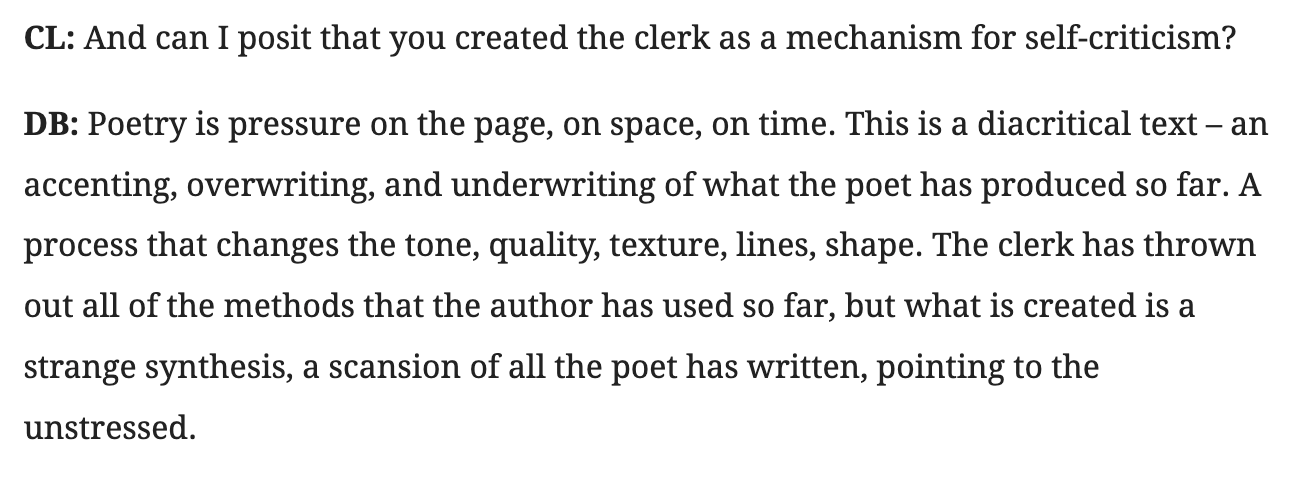
Notes: Diacritical Marks
1)
A diacritic is a glyph added to a letter to indicate a distinguishable shift in pronunciation. Here, Brand evacuates the language of diacritics from the scale of markings on letters to the scale of marking an entire text. My father taught me Quranic Arabic when I was very young as part of our bespoke early morning Islamic studies. While I have lost much of that learning, what remains is an interest in diacritics. In a previous interview with Rahel Aima (2023), we discussed the harakat, the Arabic term for diacritical marks. Harakat derives from the trilateral root ḥ-r-k (ح-ر-ك), meaning "movement" or "motion". I noted that diacritics are locomotive – they move something along, to which Aima responds, “I’m seeing little caster wheels hitched underneath [...] I like caster wheels because they don’t always work. Sometimes the wheels are like, ‘No, we’re stuck, or we’re going in all these different ways.’” Brand positions, or rather names her writing as something unfixed and perpetually in motion due to her ritualized return to accent her ideas.
The Blue Clerk is not a linear conversation – rather, it is a “primitive hypertext” (Octavia Estelle Butler, 1998) of many things that are constantly inflected by the author's return to what was to mark what could have been, or what was understressed. As a methodology and poetics, it invites us to consider revision – “accenting, overwriting, and underwriting” – as one way to break the colonial logic of compulsive (and pathological) teleology and finality. If poetry is “pressure on the page,” we are left with interlocked images.
First, in the substrate or compositional field of plastic, pressure indents and deforms the page over time, pushing both language and the page to their elastic limits.
Second, this plasticity (Catherine Malabou), or the ability to receive and give form, situates the page as a space of transformation, where sufficient accenting, overwriting, and underwriting can break the page's fibers, annihilating it to make way for another form that can hold the language.
Sometimes, we must disorganize and splinter the compositional field to see what else is possible.
2)
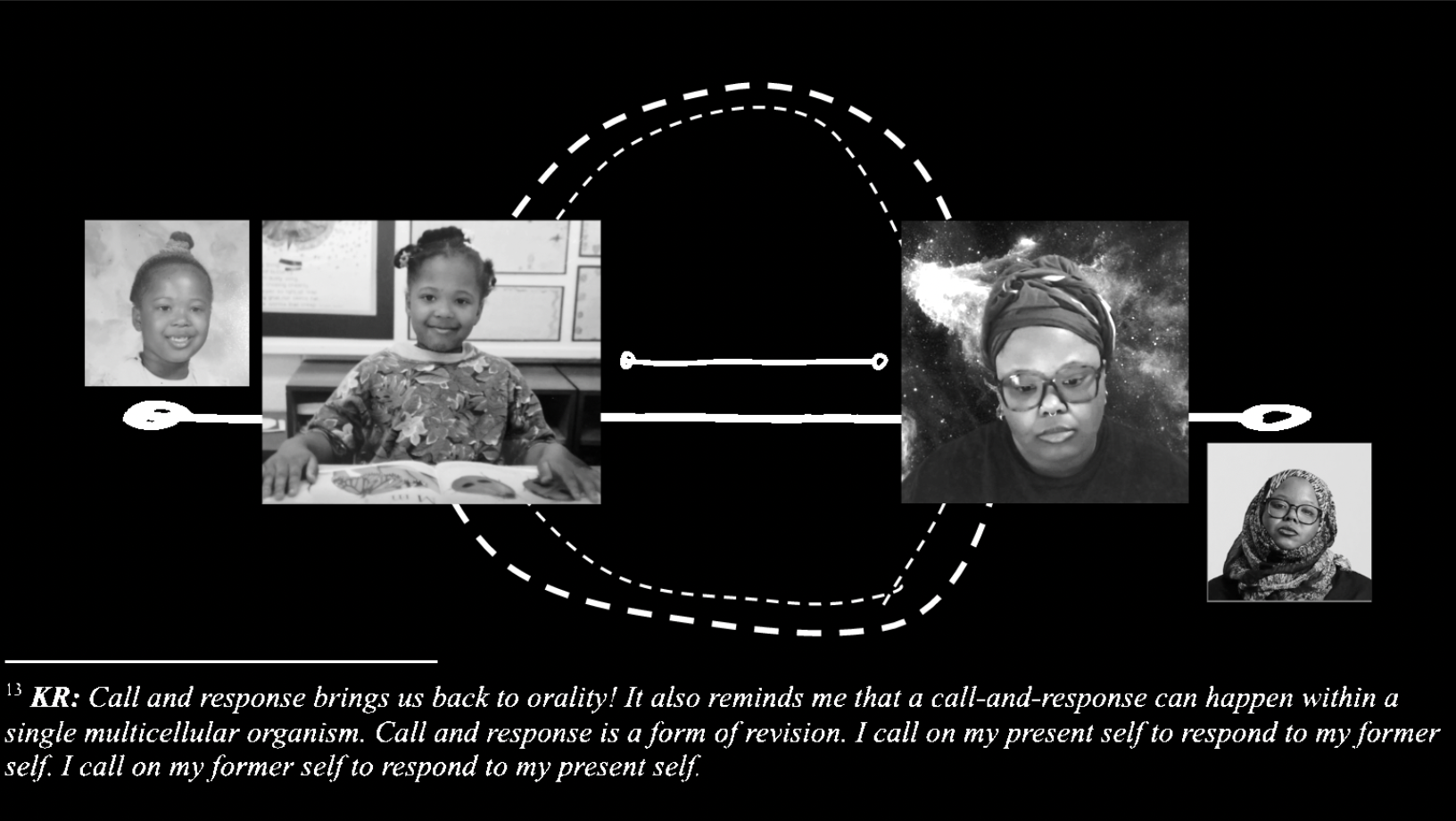
3) As a death doula in training, I am interested
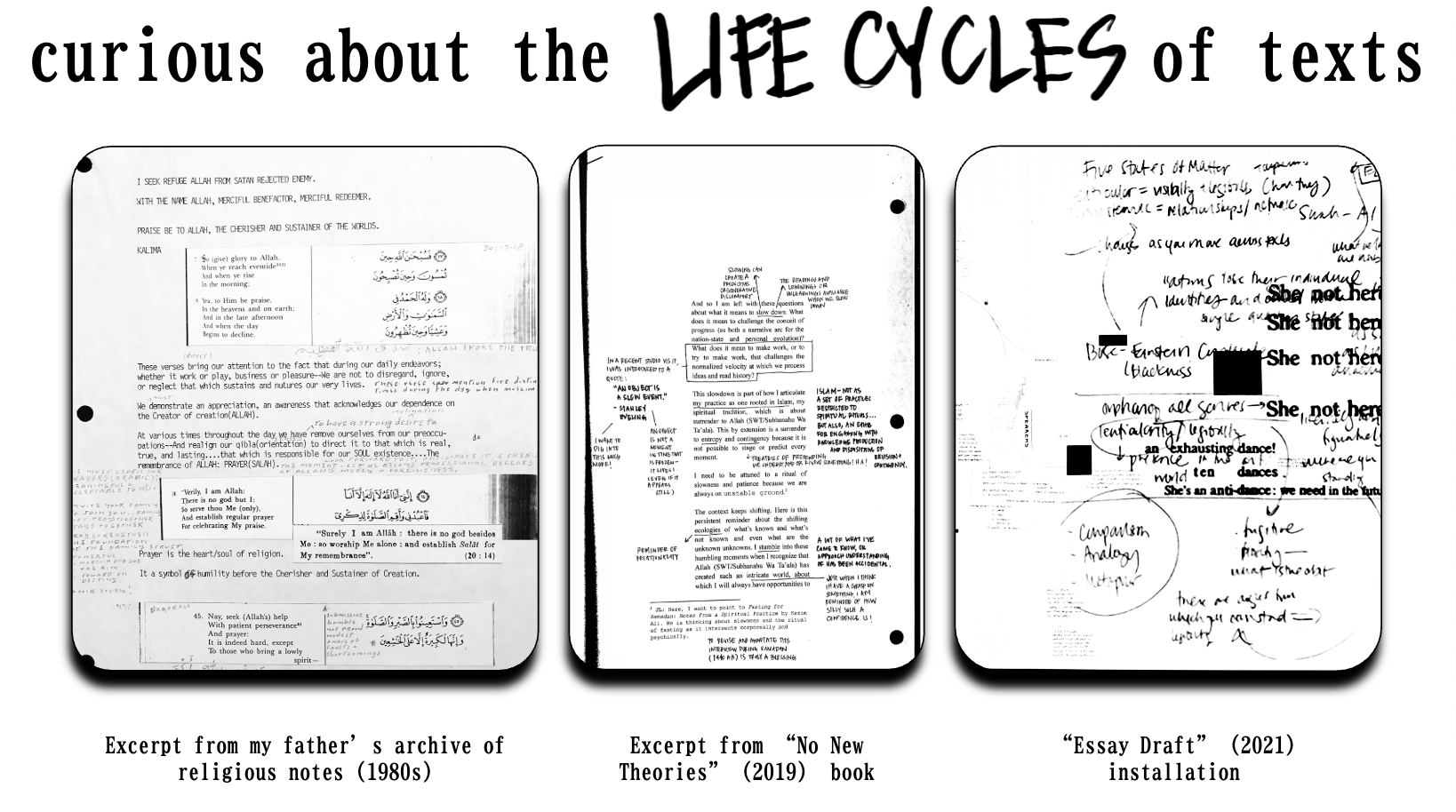
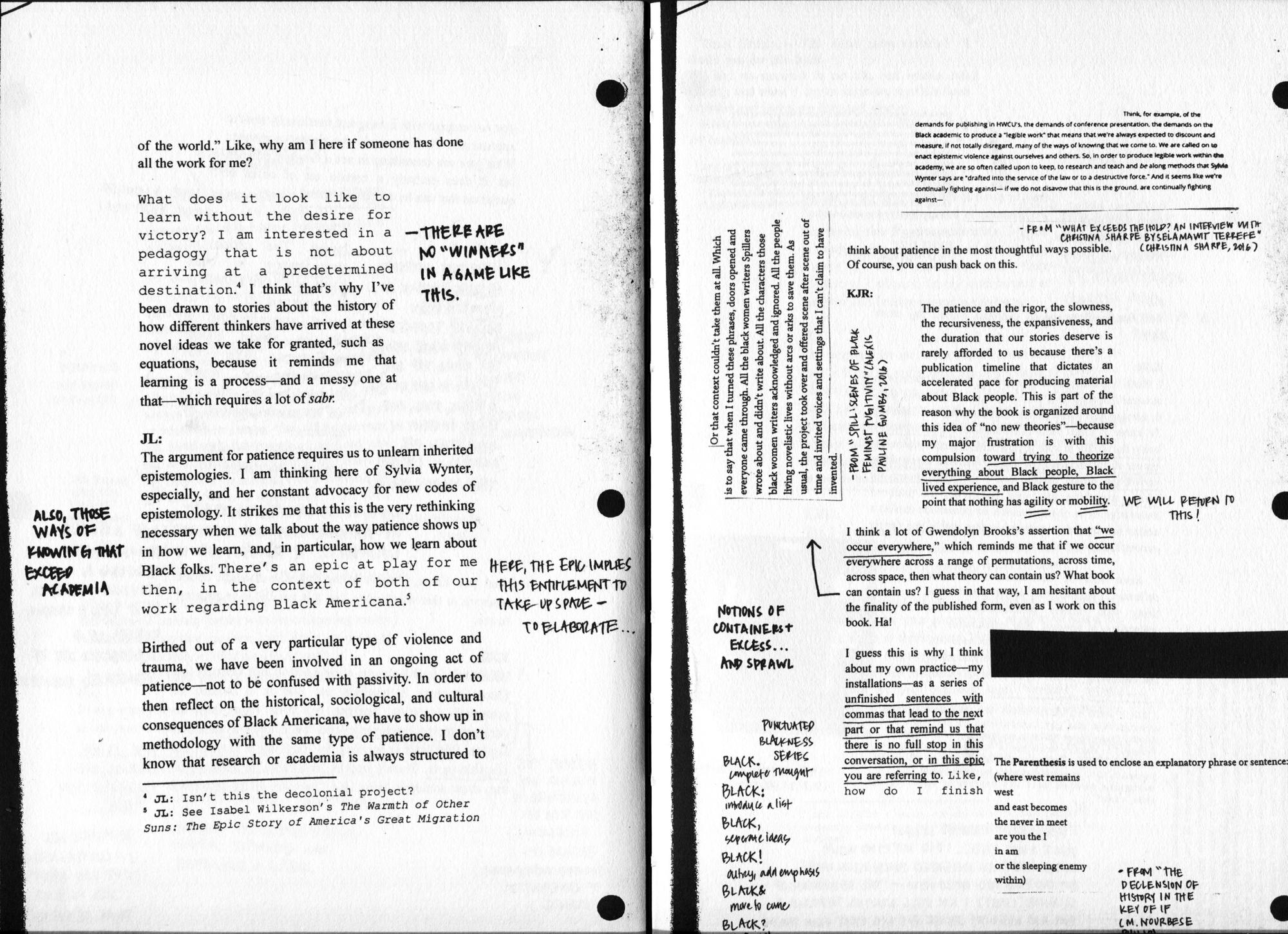
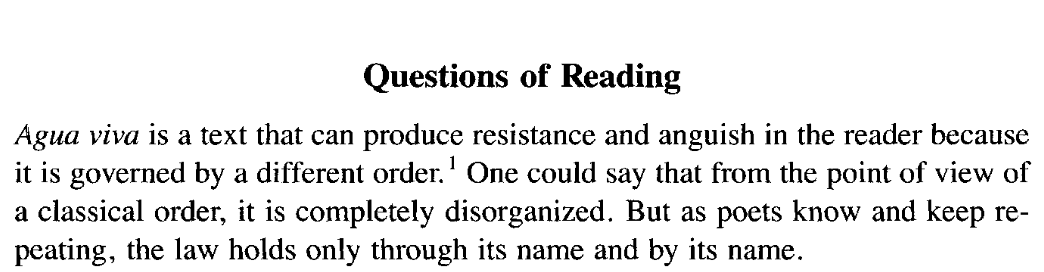
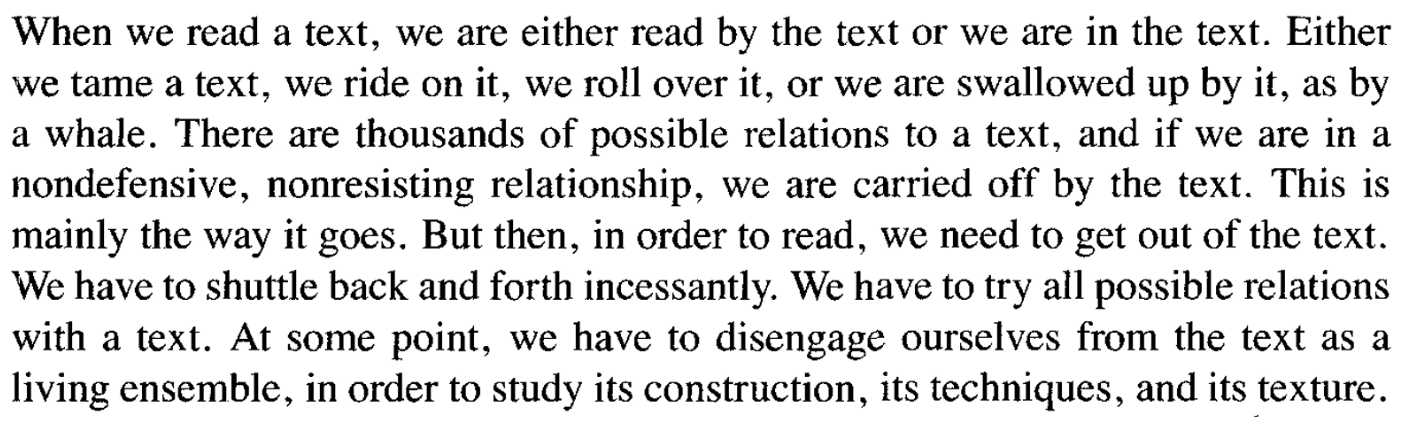
 Of Possible Relations
Hélène Cixous: Reading with Clarice Lispector
1990


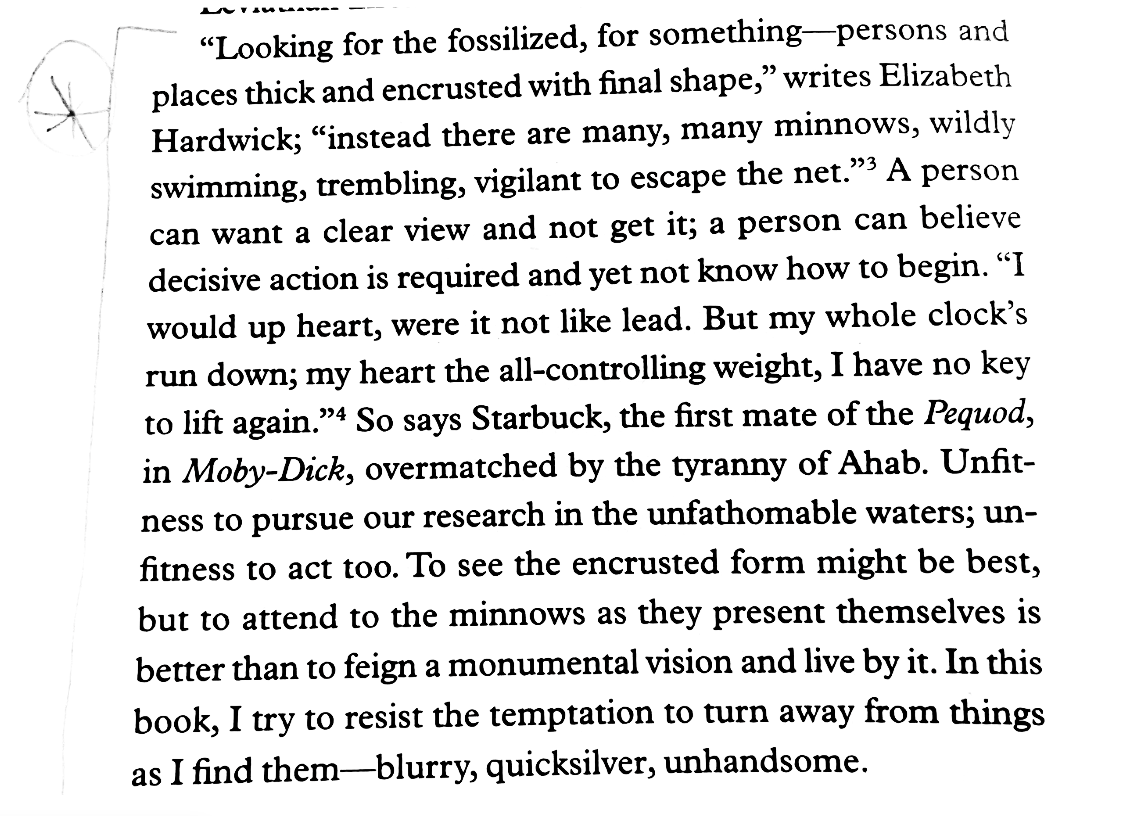
 On Resisting Temptation
Emily Ogden: On Not Knowing: How to Love and Other Essays
2021

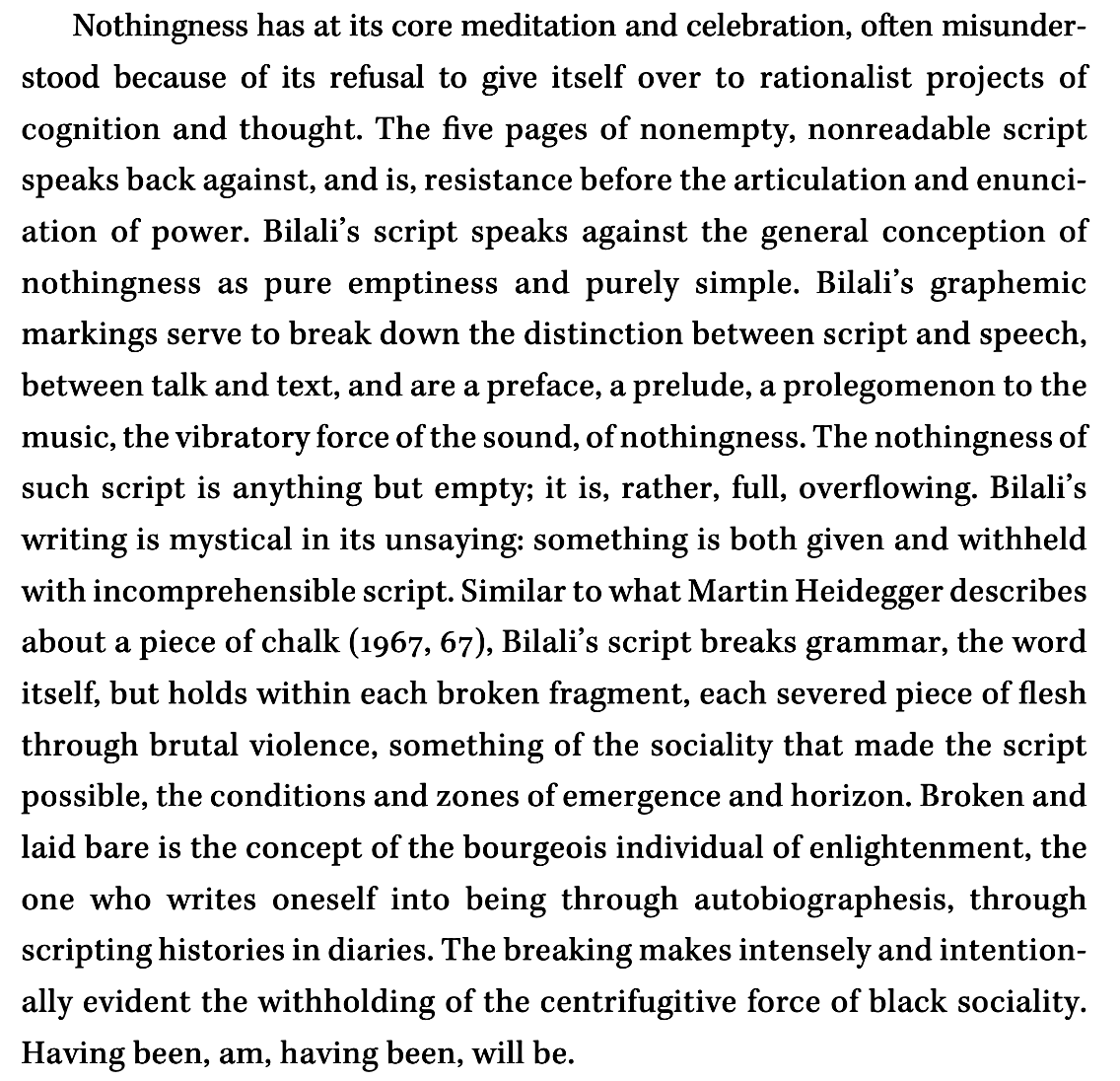
On Unsaying
Ashon Crawley: That There Might Be Black Thought: Nothing Music and the Hammond B-3
2016
[A]: Rasheed, Kameelah Janan (2021)
I mean learning as a process of radical slowing down/deceleration in the context of almost compulsory acceleration under the current conditions; an attentiveness to a velocity that allows for a patient and close reading; an engagement with curiosity, serendipity, improvisation, and tangents. Learning is a persistent reminder of the shifting ecologies of what it means to know something.
︎
︎
[C1]: “Semitic Root,” Wikipedia, last modified November 14, 2025, https://en.wikipedia.org/wiki/Semitic_root
︎
[C2]: “Project Root List,” StudyQuran, accessed November 16, 2025, https://studyquran.org/PRL/PRLonline.htm
︎
[C3]: Wehr, Hans. A Dictionary of Modern Written Arabic: Arabic-English. 4th rev. ed. Edited by J. Milton Cowan. Ithaca, NY: Spoken Language Services, Inc., 1976.
︎
[D1]: Lispector, Clarice. Água Viva. United States: New Directions, 2012.
[D2]: Acheampong, Michelle, “Kameelah Janan Rasheed on Learning and Unlearning,” Art in America, July 1, 2021.
[D3]: Syllables of Velvet” and “Sentences of Plush” in Emily Elizabeth Dickinson’s 1862 letter to Eudocia C. Flynt.
[D4]: Rasheed, Kameelah Janan (2023)
︎
[E1]: Hartman, Saidiya. Wayward Lives, Beautiful Experiments: Intimate Histories of Riotous Black Girls, Troublesome Women, and Queer Radicals. United States: W. W. Norton, 2019.; Emily Elizabeth Dickinson’s Letters (The Atlantic, 1862, L271 and L265)
︎
[E2]: Rasheed, Kameelah Janan (2023; 2021)
︎
︎
[F]: Lispector, Clarice. Água Viva. United States: New Directions, 2012.
︎
[G]: Emily Elizabeth Dickinson’s Letters (The Atlantic, 1862, L271 and L265)
︎
[H]: Renee Gladman and Fred Moten: One Long Black Sentence. United States: Image Text Ithaca, 2020.
︎
[I]: Imamura, “Escape Velocity,” last modified (n.d.), University of Oregon, accessed November 15, 2025, https://pages.uoregon.edu/imamura/121/lecture-4/escape.html
︎
[J]: Groom, Amelia. Beverly Buchanan: Marsh Ruins. United Kingdom: MIT Press, 2021.
︎
[K]: Rasheed, Kameelah Janan (2020)
︎
[L]: Gladman, Renee. Calamities. United States: Wave Books, 2020.
While texting with a friend and interlocutor for another project, I mentioned that the compositional field of Google Docs felt restrictive. I wanted to swell beyond the compositional field of the word processor, as I wanted to exceed the page, so I went to the walls. Across three frantic messages, I shared In this meandering, she asked if I’d heard of Renee Gladman’s “commotional field” in Calamities (2016). I had not. To be honest, I felt betrayed, not from this friend, but of myself. I’d purchased Calamities years ago, and in working my way through a stack of books, I had not reached the shore of this text. I grabbed the book off my “need to read” shelf and began to read frantically. The commotion is riotous and disobedient. The compositional field refuses to settle. A compositional field speaks to the environment in which the writing occurs. Gladman’s articulation is almost an exponential expansion – that the compositional field has energy and affordances.
︎
[M]: Steyerl, Hito. “A Sea of Data: Apophenia and Pattern (Mis-)Recognition.” E-Flux, April 2016.
︎
[N]:
︎
︎
[P]: “Multisensory integration — Neuroscience.” ScienceDirect. Accessed December 1, 2025. https://www.sciencedirect.com/topics/neuroscience/multisensory-integration.