






© Kameelah Janan Rasheed. All rights reserved.



[1]: Rasheed, Kameelah Janan (2021)
I mean learning as a process of radical slowing down/deceleration in the context of almost compulsory acceleration under the current conditions; an attentiveness to a velocity that allows for a patient and close reading; an engagement with curiosity, serendipity, improvisation, and tangents. Learning is a persistent reminder of the shifting ecologies of what it means to know something.
︎
︎
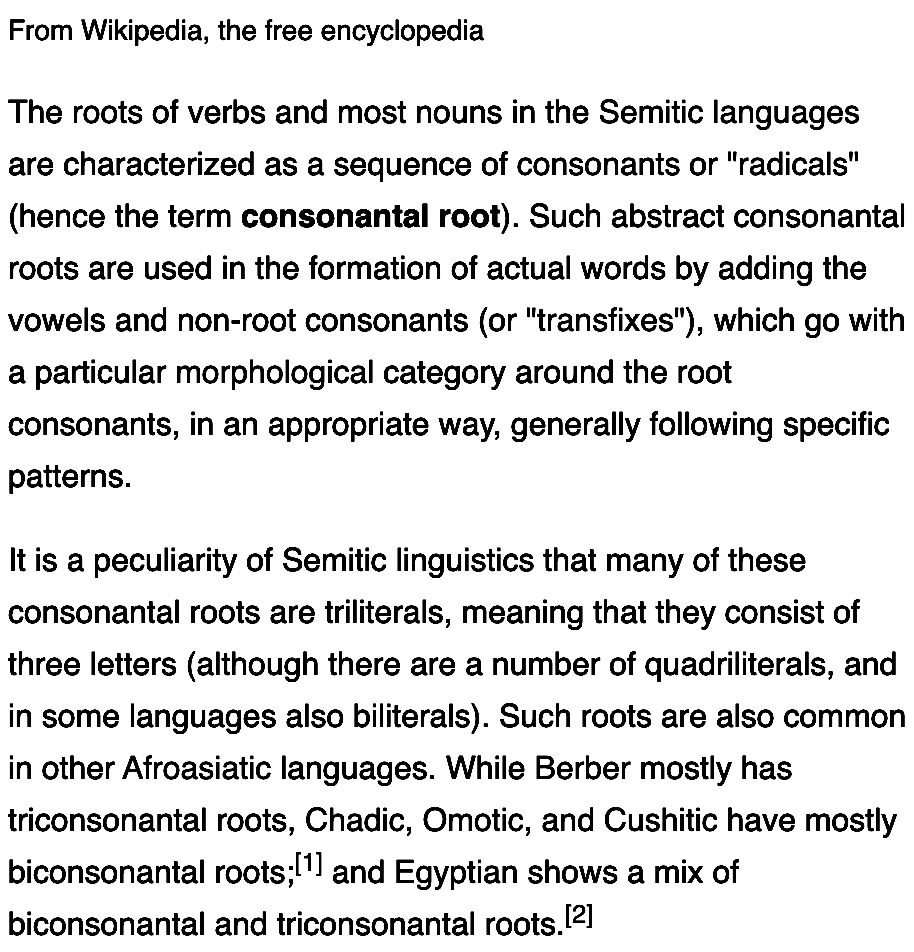
[3a]: “Semitic Root,” Wikipedia, last modified November 14, 2025, https://en.wikipedia.org/wiki/Semitic_root
︎
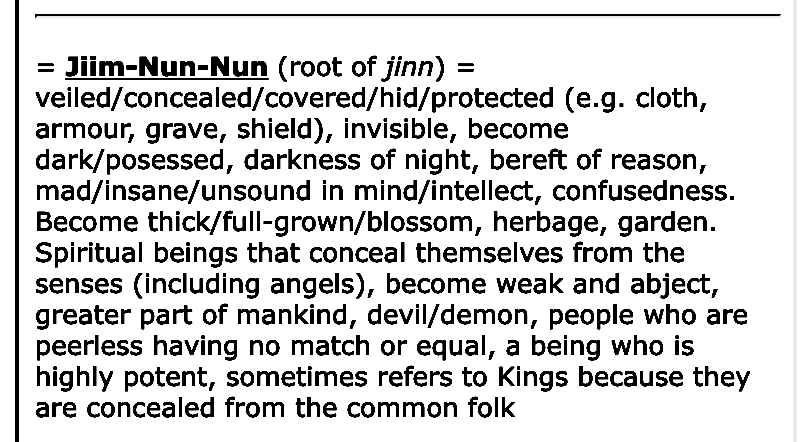
[3b]: “Project Root List,” StudyQuran, accessed November 16, 2025, https://studyquran.org/PRL/PRLonline.htm
︎
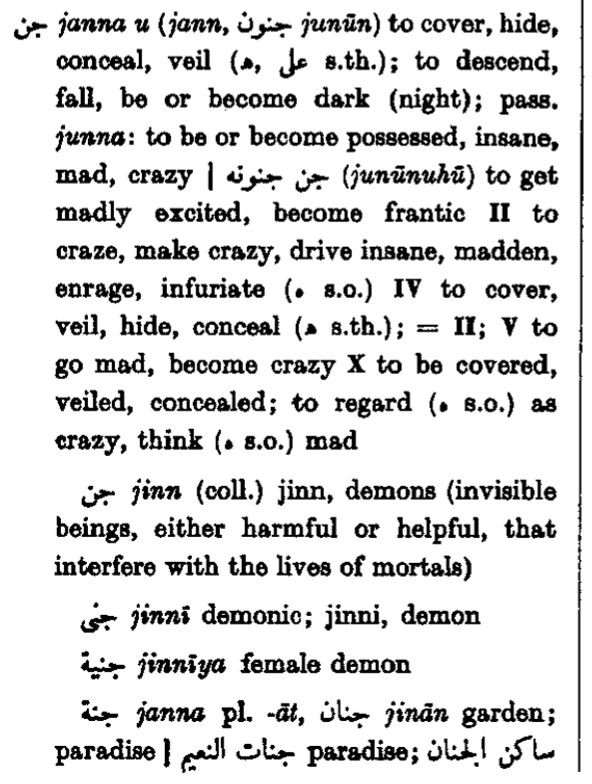
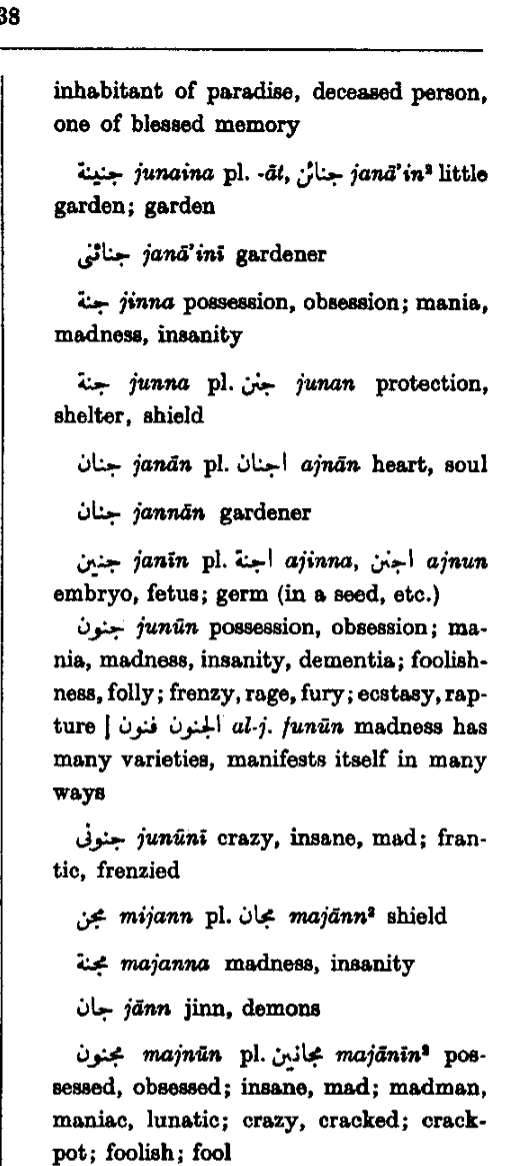
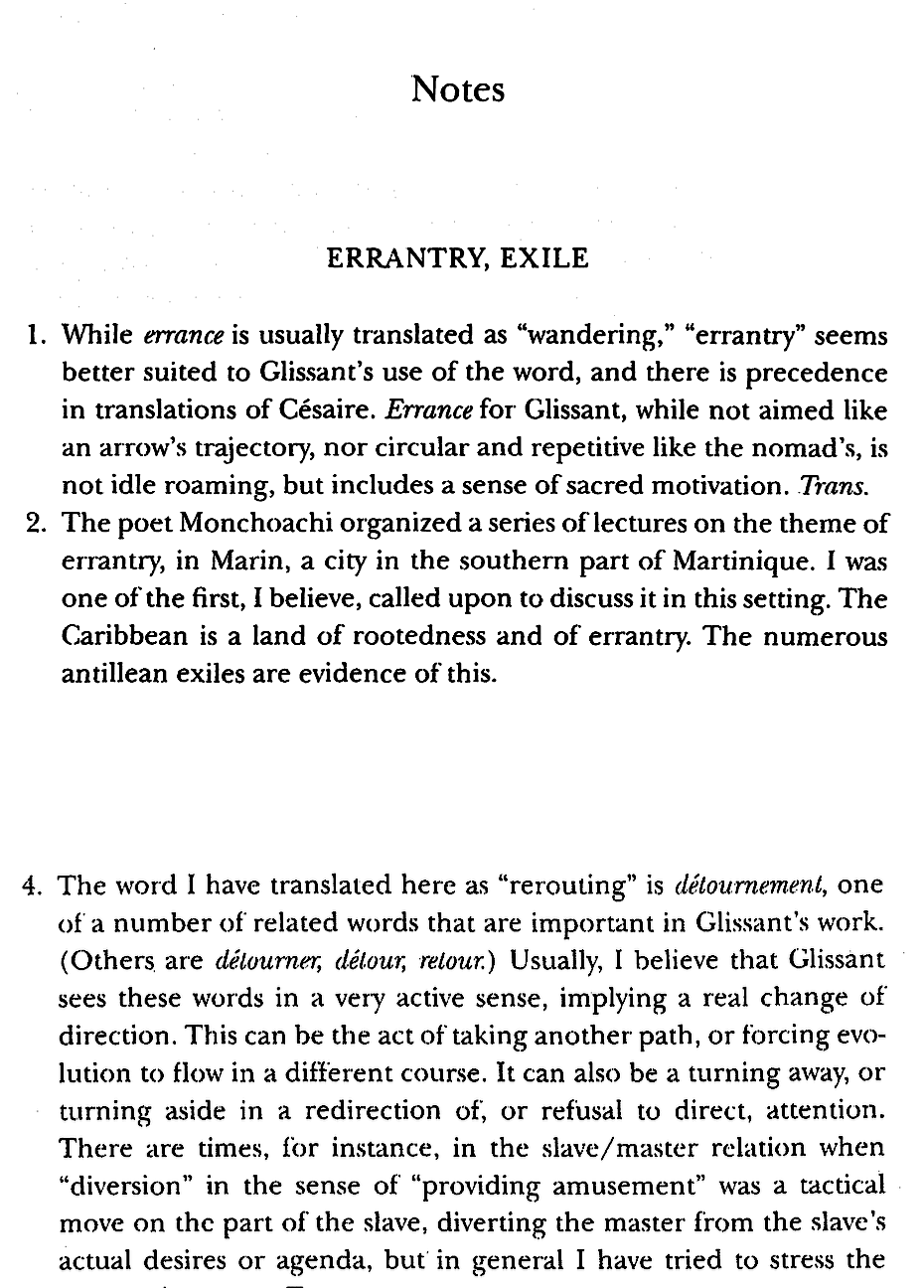
[3c]: Wehr, Hans. A Dictionary of Modern Written Arabic: Arabic-English. 4th rev. ed. Edited by J. Milton Cowan. Ithaca, NY: Spoken Language Services, Inc., 1976.
︎
[4a]: Lispector, Clarice. Água Viva. United States: New Directions, 2012.

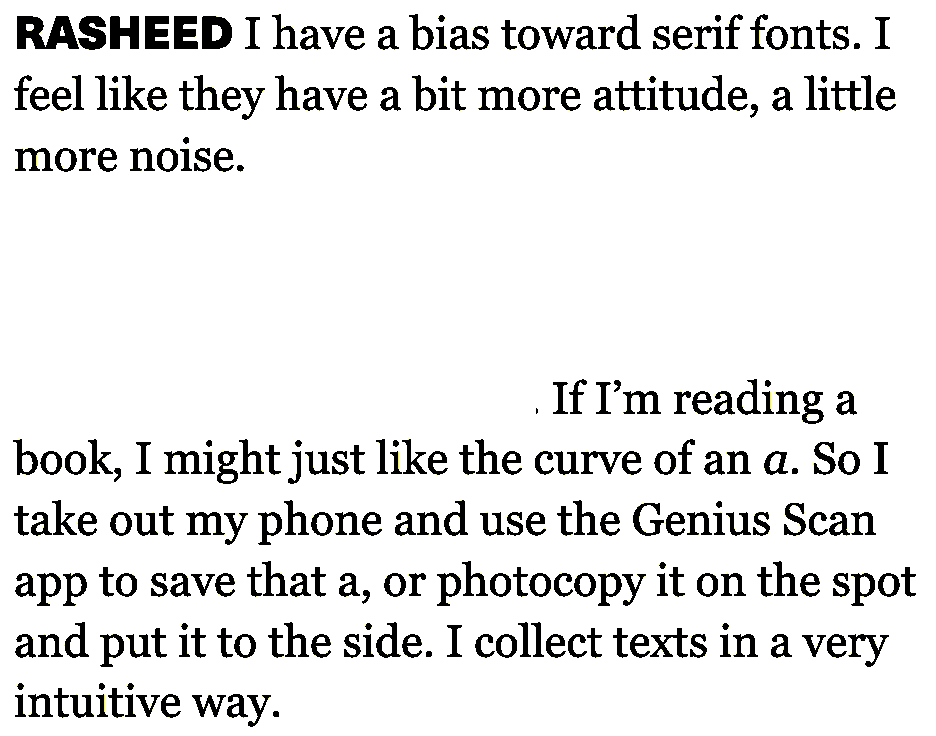
[4b]: Acheampong, Michelle, “Kameelah Janan Rasheed on Learning and Unlearning,” Art in America, July 1, 2021.
[4c]: Syllables of Velvet” and “Sentences of Plush” in Emily Elizabeth Dickinson’s 1862 letter to Eudocia C. Flynt.
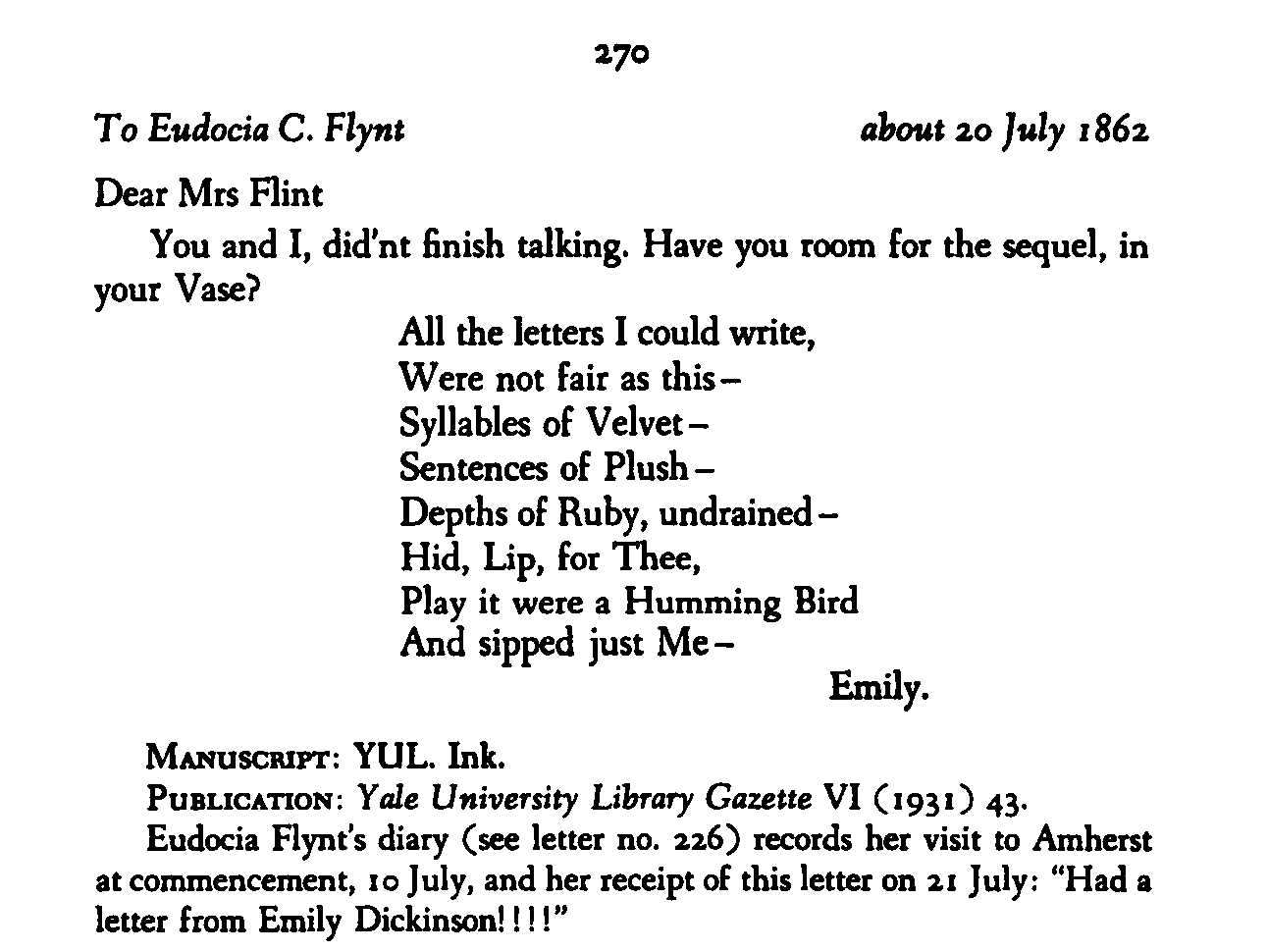
[4d]: Rasheed, Kameelah Janan (2023)
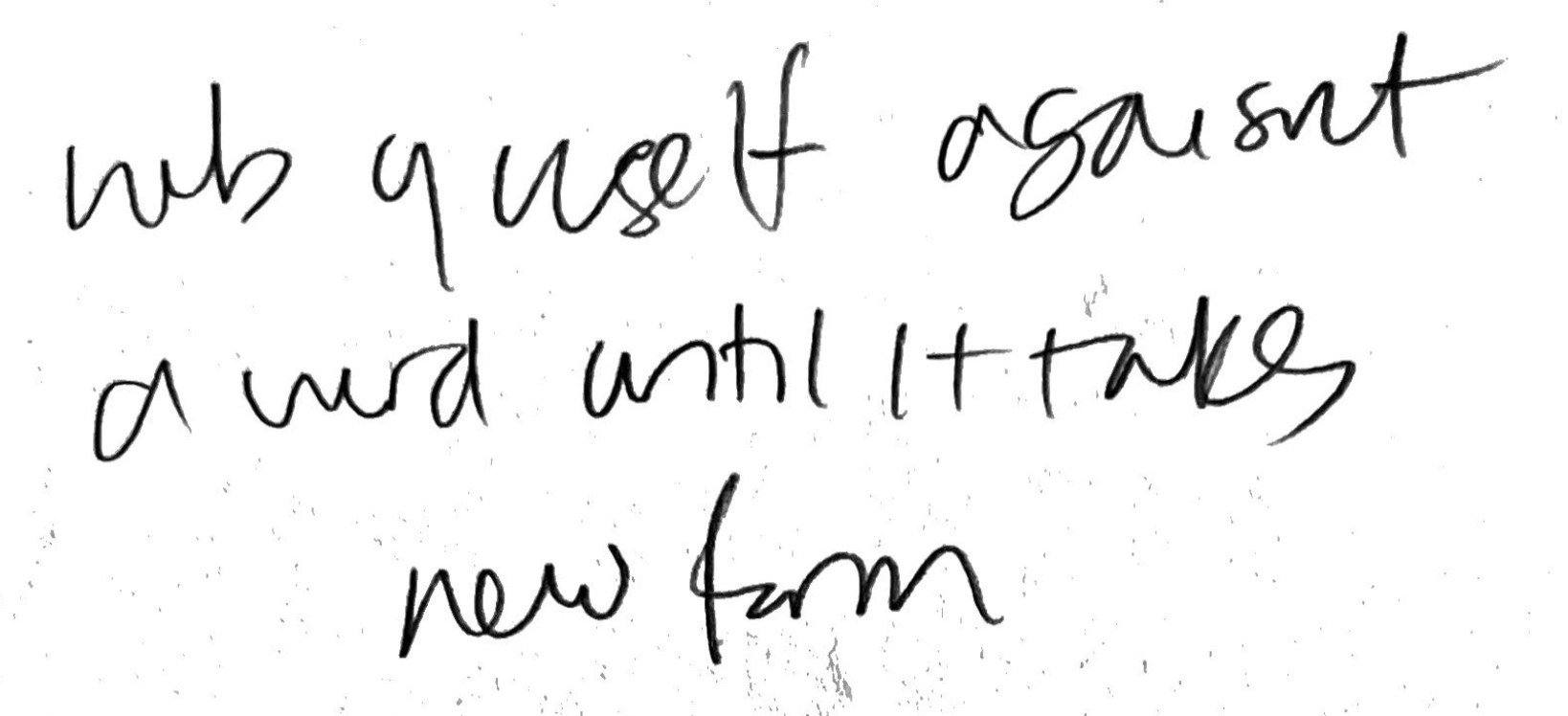
︎
[5a]: Hartman, Saidiya. Wayward Lives, Beautiful Experiments: Intimate Histories of Riotous Black Girls, Troublesome Women, and Queer Radicals. United States: W. W. Norton, 2019.; Emily Elizabeth Dickinson’s Letters (The Atlantic, 1862, L271 and L265)

︎
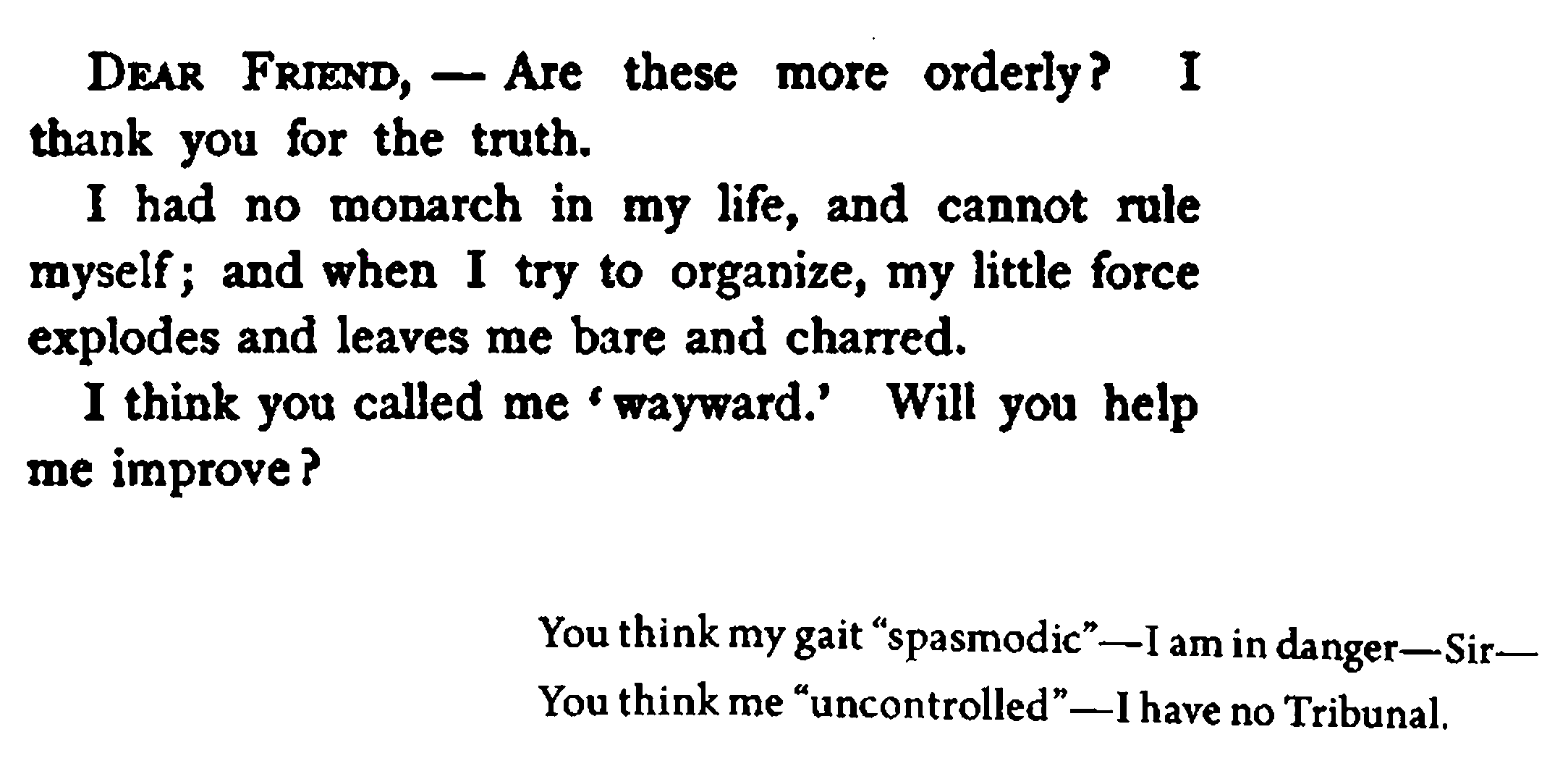
[5b]: Rasheed, Kameelah Janan (2023; 2021)
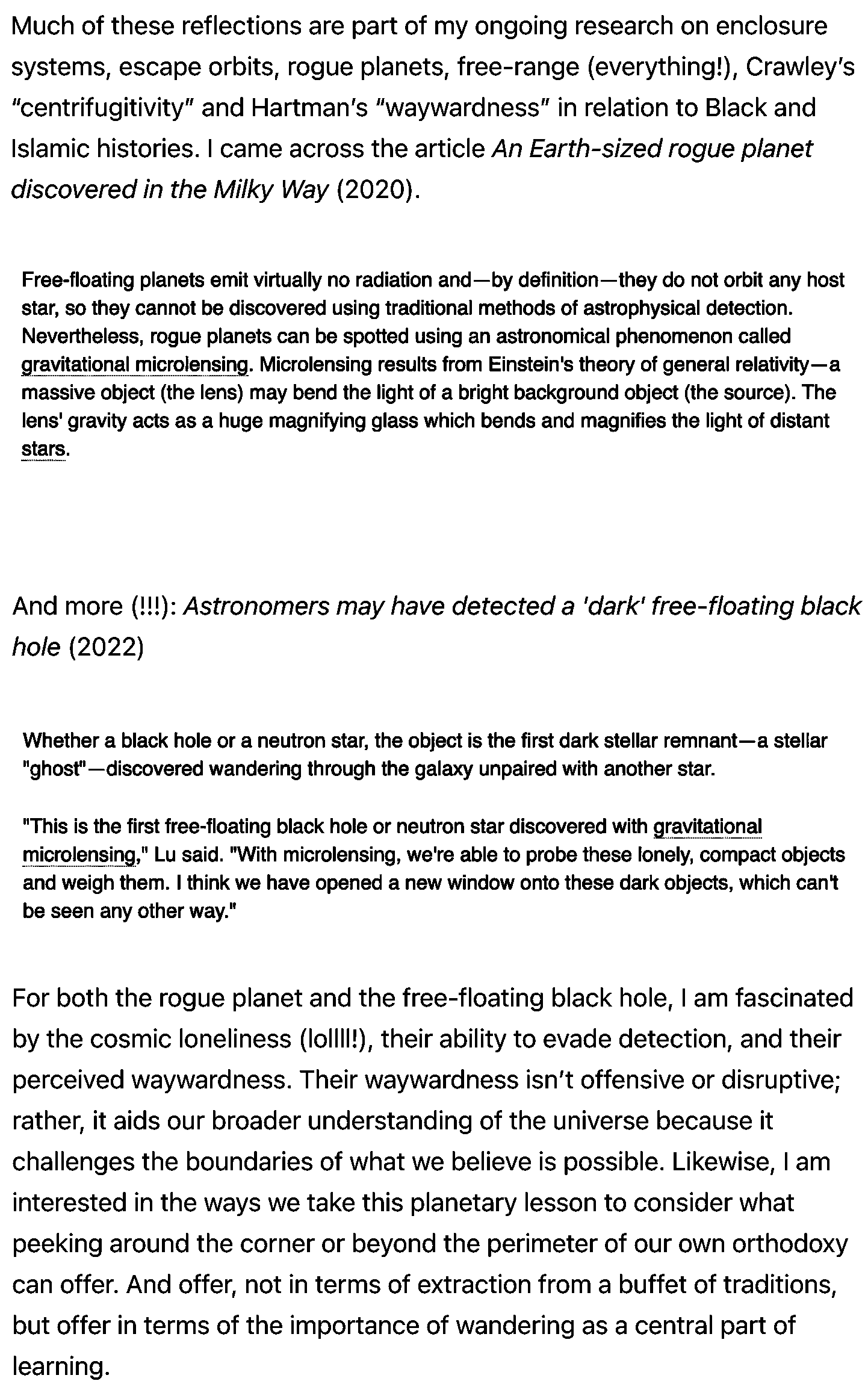
︎

︎
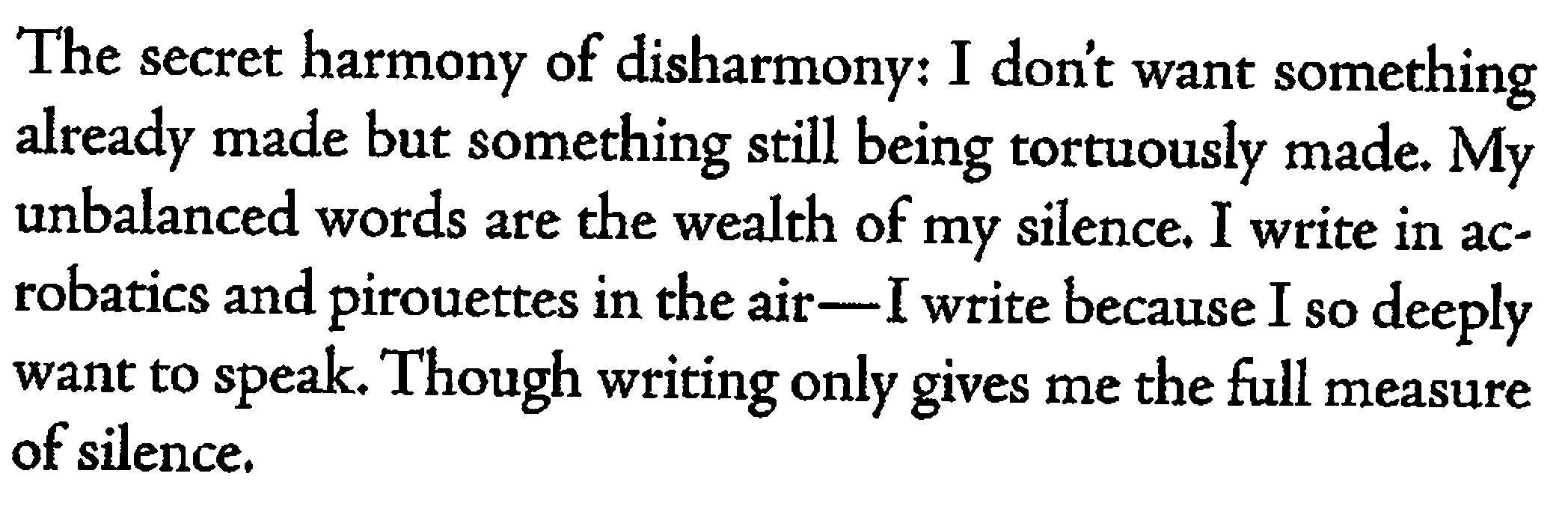
[6]: Lispector, Clarice. Água Viva. United States: New Directions, 2012.
︎
[7]: Emily Elizabeth Dickinson’s Letters (The Atlantic, 1862, L271 and L265)
︎
[8]: Renee Gladman and Fred Moten: One Long Black Sentence. United States: Image Text Ithaca, 2020.

︎
[9]: Imamura, “Escape Velocity,” last modified (n.d.), University of Oregon, accessed November 15, 2025, https://pages.uoregon.edu/imamura/121/lecture-4/escape.html

︎
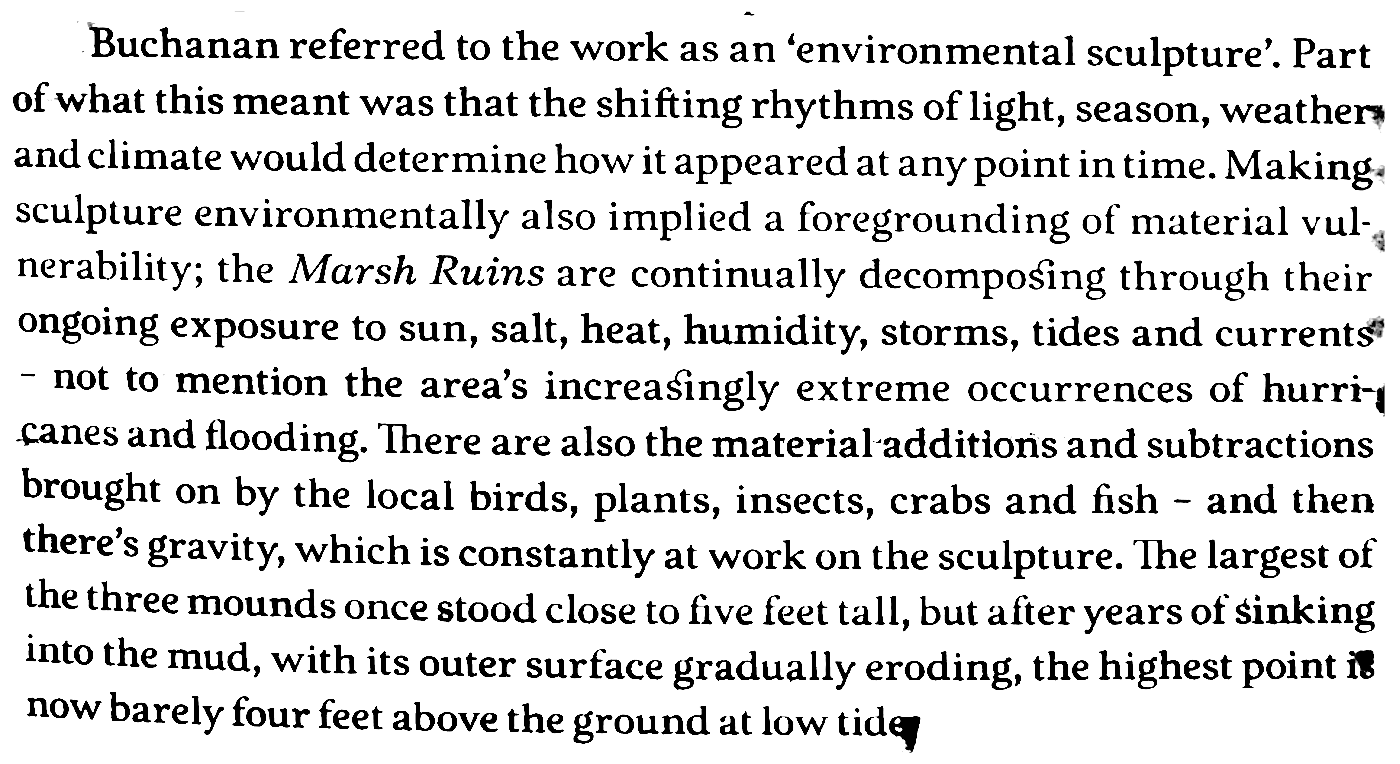
[10]: Groom, Amelia. Beverly Buchanan: Marsh Ruins. United Kingdom: MIT Press, 2021.
︎
[11]: Rasheed, Kameelah Janan (2020)

︎
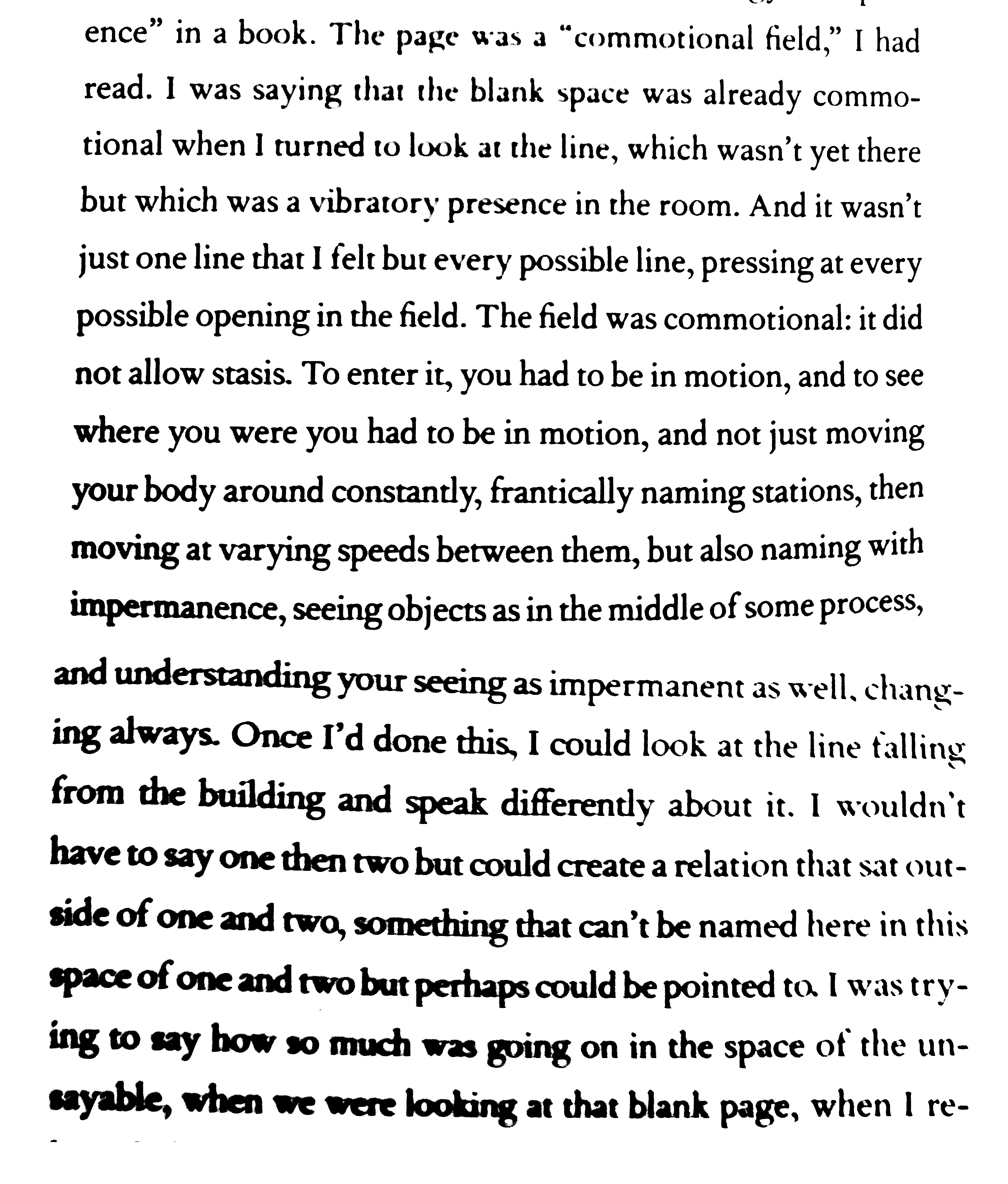
[12]: Gladman, Renee. Calamities. United States: Wave Books, 2020.
 While texting with a friend and interlocutor for another project, I mentioned that the compositional field of Google Docs felt restrictive. I wanted to swell beyond the compositional field of the word processor, as I wanted to exceed the page, so I went to the walls. Across three frantic messages, I shared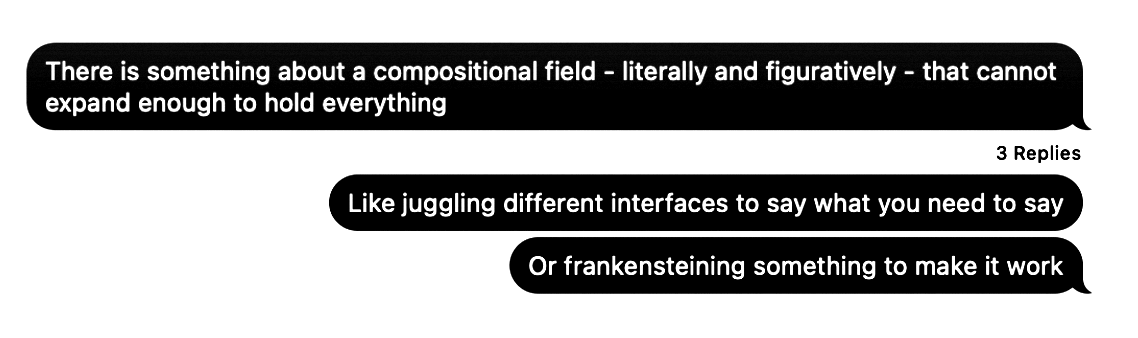
In this meandering, she asked if I’d heard of Renee Gladman’s “commotional field” in Calamities (2016). I had not. To be honest, I felt betrayed, not from this friend, but of myself. I’d purchased Calamities years ago, and in working my way through a stack of books, I had not reached the shore of this text. I grabbed the book off my “need to read” shelf and began to read frantically. The commotion is riotous and disobedient. The compositional field refuses to settle. A compositional field speaks to the environment in which the writing occurs. Gladman’s articulation is almost an exponential expansion – that the compositional field has energy and affordances.
︎
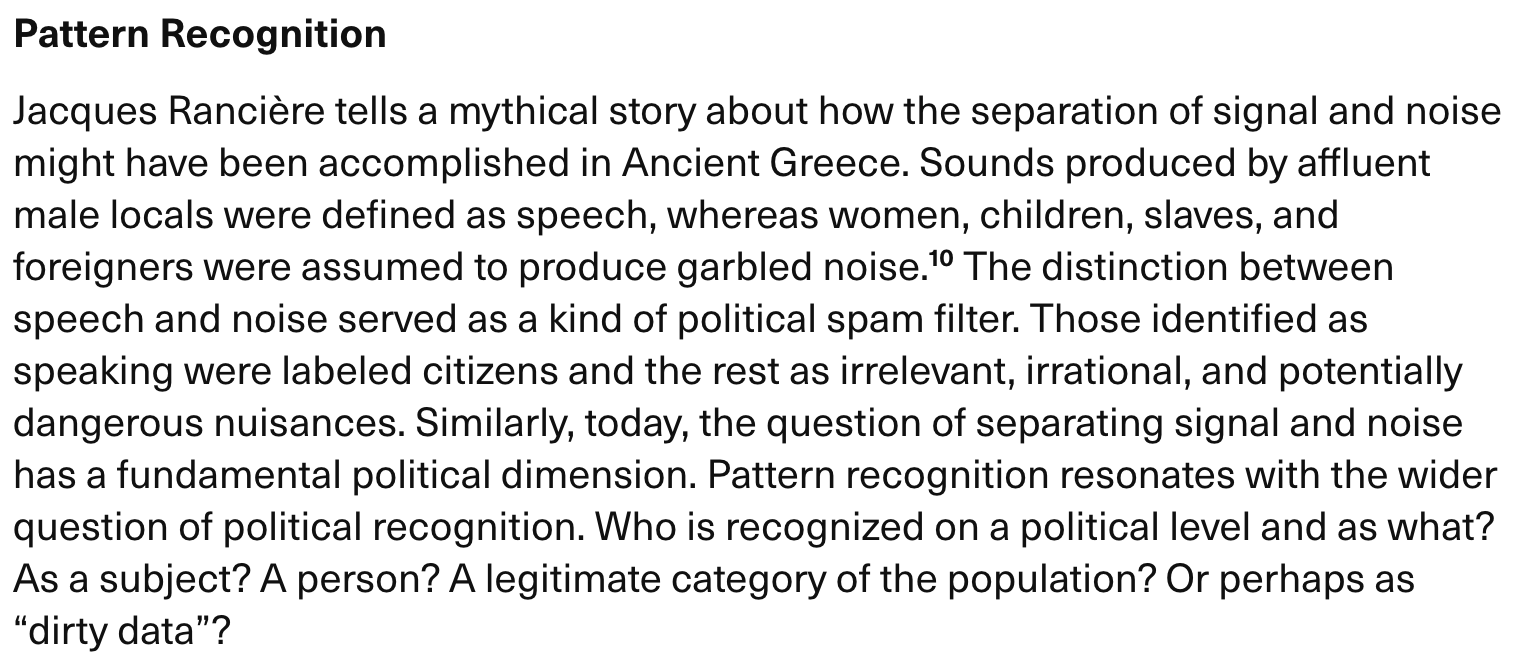
[13]: Steyerl, Hito. “A Sea of Data: Apophenia and Pattern (Mis-)Recognition.” E-Flux, April 2016.
︎
[14]:

︎
︎
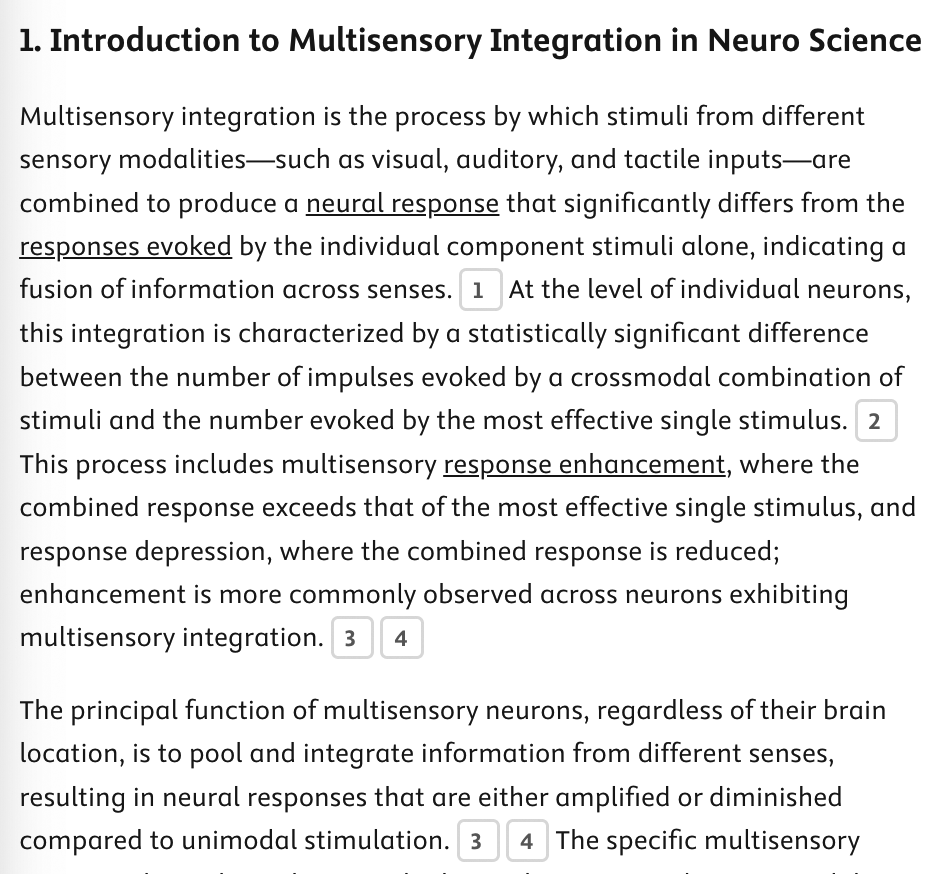
[16]: “Multisensory integration — Neuroscience.” ScienceDirect. Accessed December 1, 2025. https://www.sciencedirect.com/topics/neuroscience/multisensory-integration.
[what is writing?]
How to Cite this Page: Rasheed, Kameelah Janan. “Work Statement: slow and sprawling,: [what is writing?].” KJR Studios Website. Accessed Month Day, Year. https://kameelahr.com/Work-Statement-sprawling
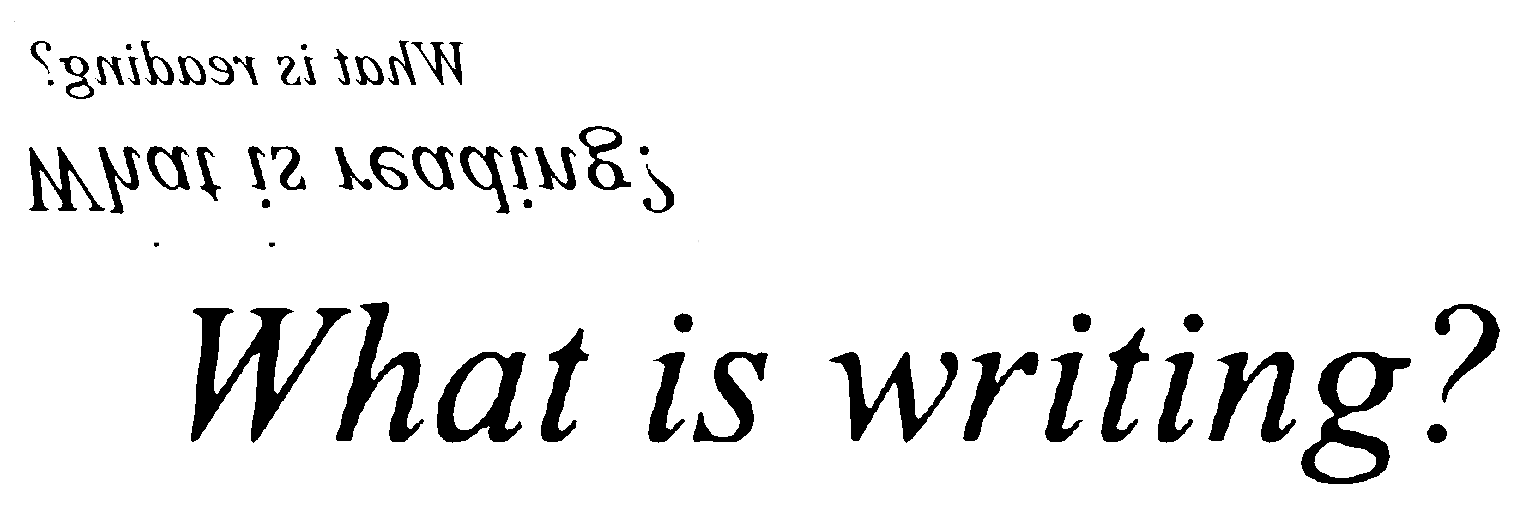
Writing is any mark-making intended to communicate something, regardless of legibility.
The substrate is the stage or context on which something occurs. The substrate is not agnostic; its material conditions shape what can be made visible and the duration of that visibility.
The marking material is the substance or medium that enables a mark to appear on a substrate, regardless of how long the mark remains visible.
The marking tool is the object used to apply the marking material to the substrate.
The writer is the entity—across species and beyond the living/dead binary—that uses a marking tool and marking material to create an intentional mark on a substrate.
The interaction among the writer, marking tool, marking material, and substrate produces a mark.
The environment within which this interaction occurs is called the writing ecology.
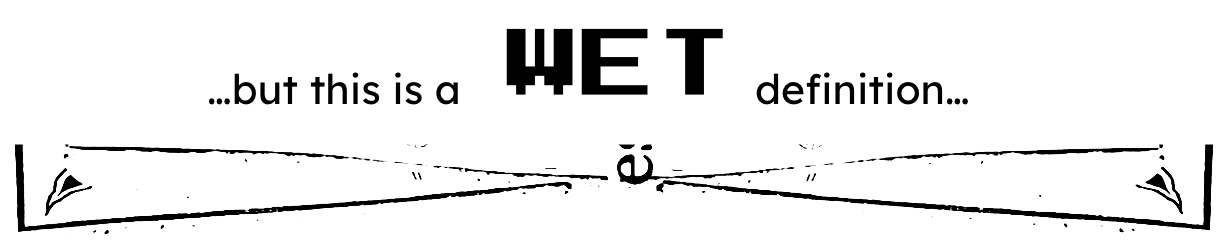
What is missing from this wet definition?
[1]: Rasheed, Kameelah Janan (2021)
I mean learning as a process of radical slowing down/deceleration in the context of almost compulsory acceleration under the current conditions; an attentiveness to a velocity that allows for a patient and close reading; an engagement with curiosity, serendipity, improvisation, and tangents. Learning is a persistent reminder of the shifting ecologies of what it means to know something.
︎
︎
[3a]: “Semitic Root,” Wikipedia, last modified November 14, 2025, https://en.wikipedia.org/wiki/Semitic_root
︎
[3b]: “Project Root List,” StudyQuran, accessed November 16, 2025, https://studyquran.org/PRL/PRLonline.htm
︎
[3c]: Wehr, Hans. A Dictionary of Modern Written Arabic: Arabic-English. 4th rev. ed. Edited by J. Milton Cowan. Ithaca, NY: Spoken Language Services, Inc., 1976.
︎
[4a]: Lispector, Clarice. Água Viva. United States: New Directions, 2012.
[4b]: Acheampong, Michelle, “Kameelah Janan Rasheed on Learning and Unlearning,” Art in America, July 1, 2021.
[4c]: Syllables of Velvet” and “Sentences of Plush” in Emily Elizabeth Dickinson’s 1862 letter to Eudocia C. Flynt.
[4d]: Rasheed, Kameelah Janan (2023)
︎
[5a]: Hartman, Saidiya. Wayward Lives, Beautiful Experiments: Intimate Histories of Riotous Black Girls, Troublesome Women, and Queer Radicals. United States: W. W. Norton, 2019.; Emily Elizabeth Dickinson’s Letters (The Atlantic, 1862, L271 and L265)
︎
[5b]: Rasheed, Kameelah Janan (2023; 2021)
︎
︎
[6]: Lispector, Clarice. Água Viva. United States: New Directions, 2012.
︎
[7]: Emily Elizabeth Dickinson’s Letters (The Atlantic, 1862, L271 and L265)
︎
[8]: Renee Gladman and Fred Moten: One Long Black Sentence. United States: Image Text Ithaca, 2020.
︎
[9]: Imamura, “Escape Velocity,” last modified (n.d.), University of Oregon, accessed November 15, 2025, https://pages.uoregon.edu/imamura/121/lecture-4/escape.html
︎
[10]: Groom, Amelia. Beverly Buchanan: Marsh Ruins. United Kingdom: MIT Press, 2021.
︎
[11]: Rasheed, Kameelah Janan (2020)
︎
[12]: Gladman, Renee. Calamities. United States: Wave Books, 2020.
While texting with a friend and interlocutor for another project, I mentioned that the compositional field of Google Docs felt restrictive. I wanted to swell beyond the compositional field of the word processor, as I wanted to exceed the page, so I went to the walls. Across three frantic messages, I shared In this meandering, she asked if I’d heard of Renee Gladman’s “commotional field” in Calamities (2016). I had not. To be honest, I felt betrayed, not from this friend, but of myself. I’d purchased Calamities years ago, and in working my way through a stack of books, I had not reached the shore of this text. I grabbed the book off my “need to read” shelf and began to read frantically. The commotion is riotous and disobedient. The compositional field refuses to settle. A compositional field speaks to the environment in which the writing occurs. Gladman’s articulation is almost an exponential expansion – that the compositional field has energy and affordances.
︎
[13]: Steyerl, Hito. “A Sea of Data: Apophenia and Pattern (Mis-) Recognition.” E-Flux, April 2016.
︎
[14]:
︎
︎
[16]: “Multisensory integration — Neuroscience.” ScienceDirect. Accessed December 1, 2025. https://www.sciencedirect.com/topics/neuroscience/multisensory-integration.